

They owned the customer journey until inspection handed it off.

- Inspections delivered
- 9,892
- Average inspection time, vs. 30–45 min manual
- 10 min 20 s
- Estimated inspector time saved
- ~4,480 hrs
“A U.S. captive auto finance company had built an end-to-end branded experience. At lease-end, the inspection still sent the customer into someone else's workflow.”
The weakest link was at the end of the term.
The captive controlled the relationship end to end
The company supports a major multinational automaker across six automotive brands and manages the relationship through financing, servicing and end-of-term. That made lease-end more than an operational step. It was part of the brand experience the captive had spent the full term building.
Inspection introduced a third-party hand-off
Traditional in-person inspections required scheduling and field capacity, but they also created a visible break in the customer journey. A separate vendor experience, portal or app could make the final stage of the lease feel disconnected from everything that came before it.
Condition decisions still needed a record people could review
Subjective damage calls could complicate excess-wear and residual conversations. Repair-cost estimates produced by the captive itself could also be questioned as self-interested. The challenge was not just speed. It was keeping the experience branded while strengthening the condition record behind the decision.
Make inspection feel native
The requirement was to preserve the captive experience while adding a consistent condition workflow behind it.
“The requirement: keep the customer inside the captive's own experience. Standardize capture and review. Add an independent repair-cost step when needed. Return condition information that can support lease-end and trade-in decisions.”
Full stack, white-labeled, embedded
1. Built directly into the customer's app
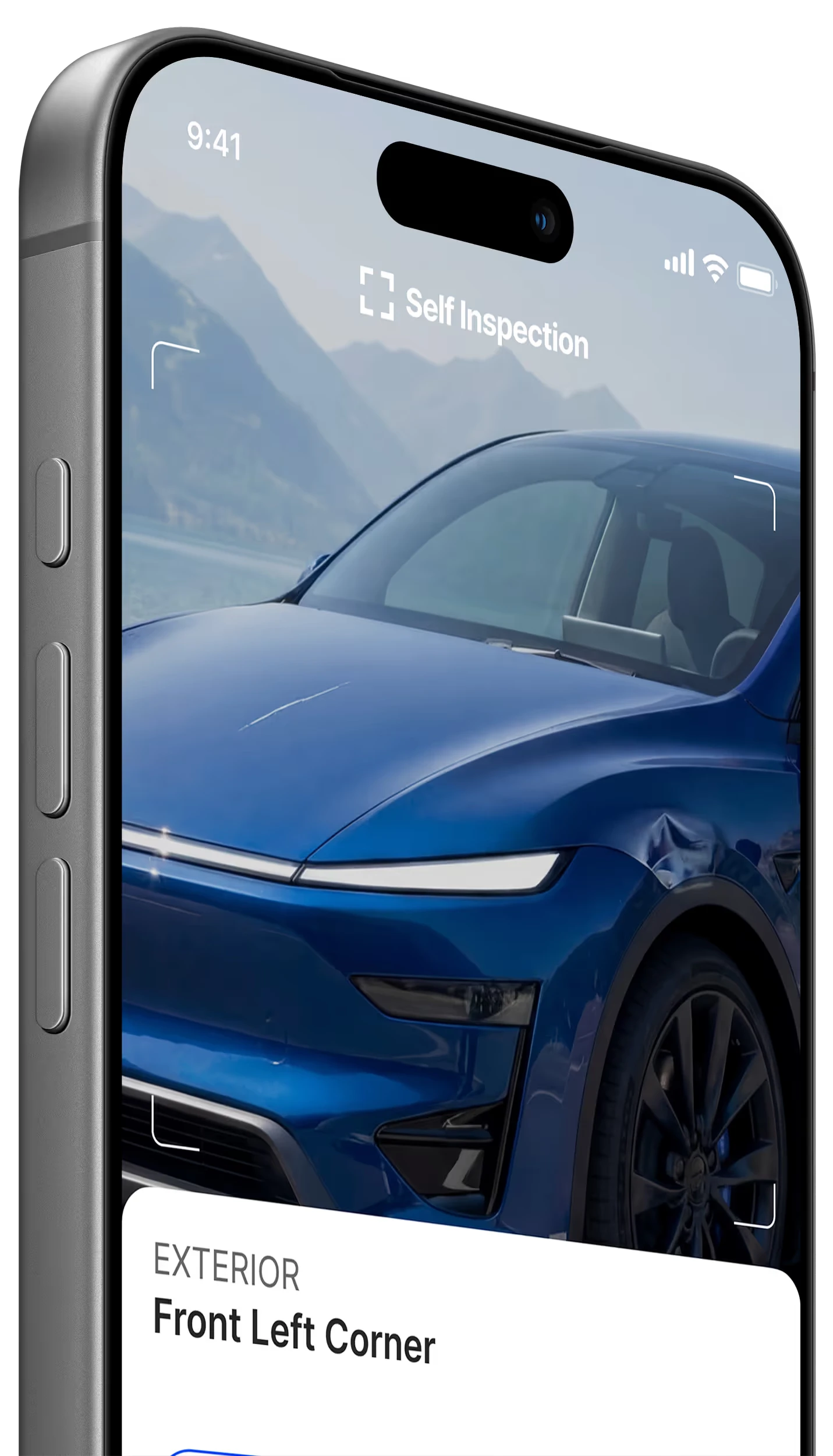
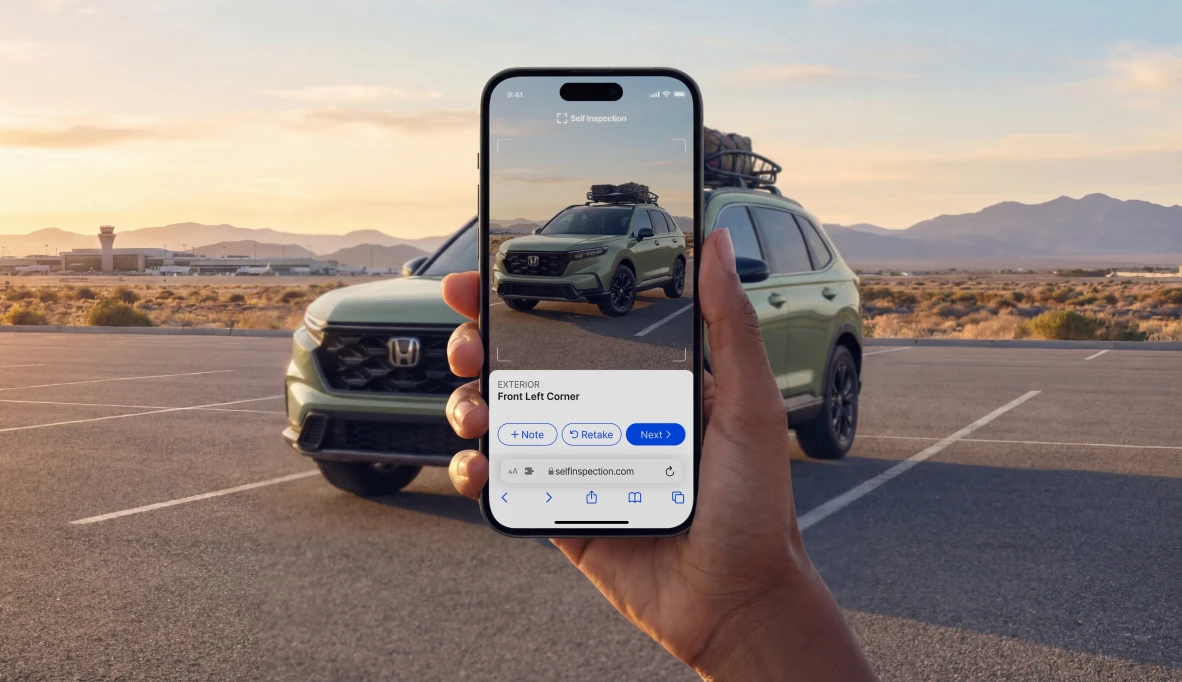
The guided vehicle walk-around was white-labeled and embedded directly into the customer's own front-end application. The inspection could feel like a native feature instead of a hand-off to a separate vendor tool.
2. Analyze and structure the condition record
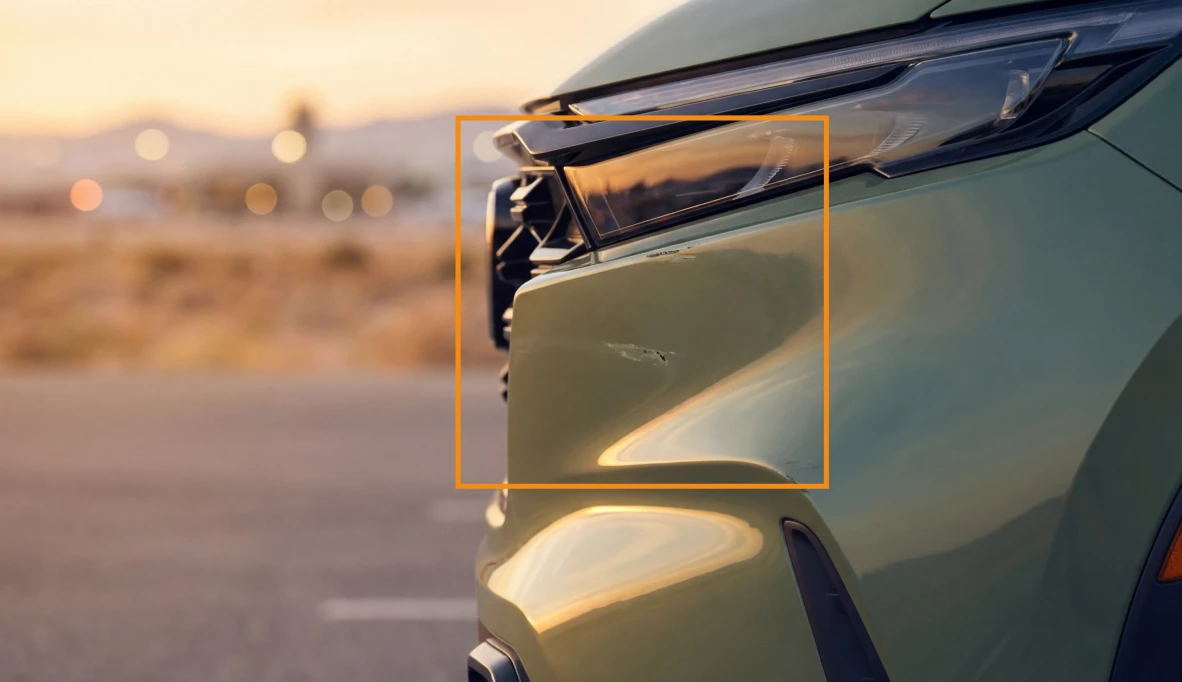
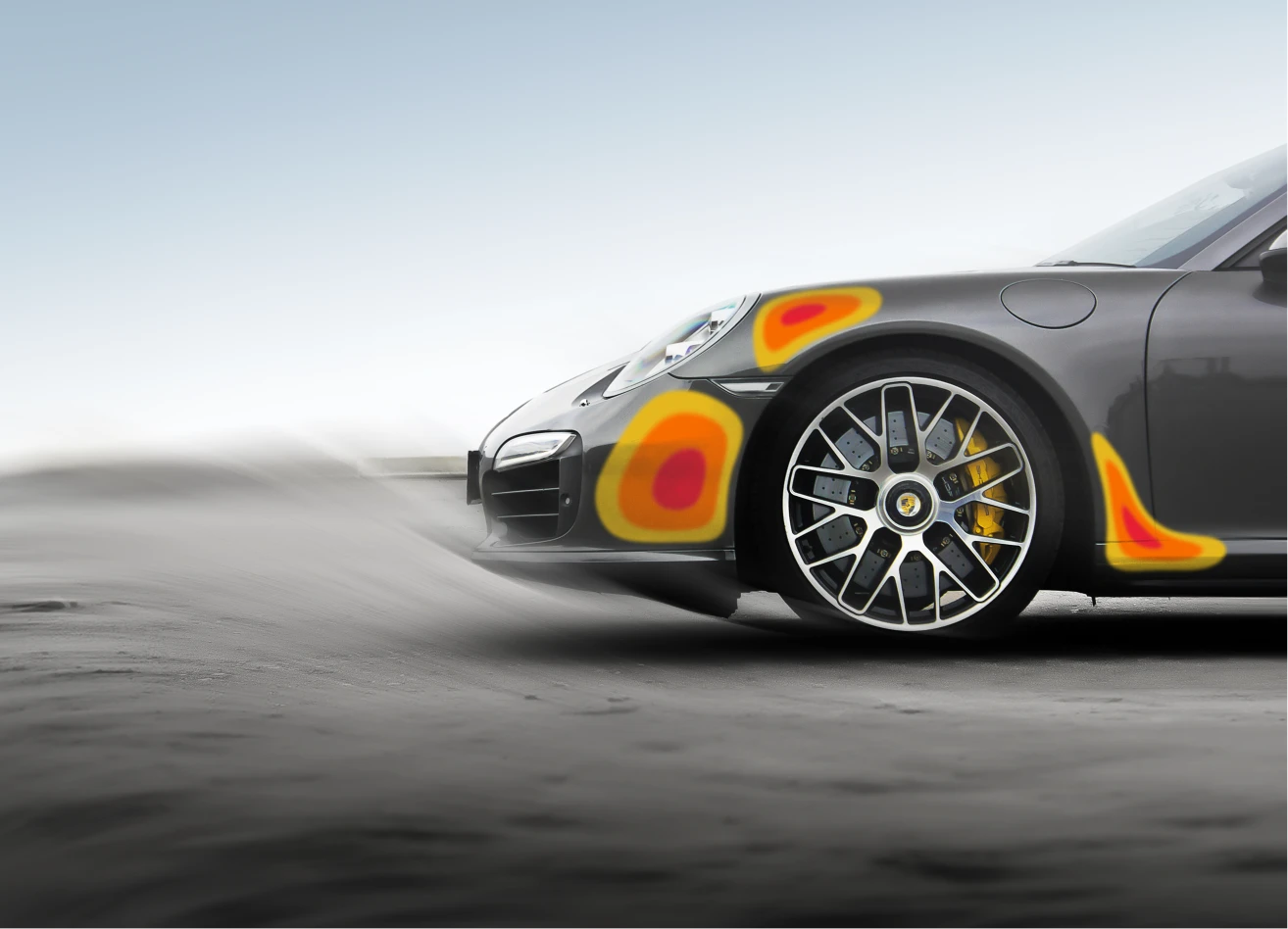
AI-assisted analysis helps classify vehicle damage, while the useful output is a standardized, reviewable condition record. The technology supports the process, but the customer should remember the consistency of the information, not the model behind it.
3. Separate the repair-cost estimate from the captive
Self Inspection's insurance-trained evaluators provide a third-party repair-cost estimate from the reported condition. That creates an independent reference point for conversations with lessees, dealers or insurers without claiming that the estimate automatically resolves a dispute.
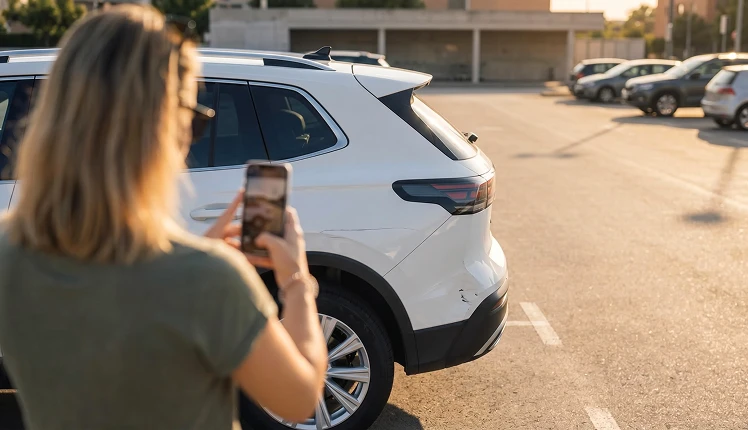
From pilot to an embedded native feature
The program expanded in stages, moving from a multi-site inspection workflow to a fully white-labeled experience inside the captive's own application.
| When | Milestone | What changed |
|---|---|---|
| Oct 1, 2024 | Pilot launch | First live inspection completed on the platform. |
| Late 2024 | Multi-site rollout | Atlanta, Houston twice, and San Diego went live across four operational sites. |
| Early 2025 | Full stack live | AI-assisted damage analysis and third-party repair estimates were enabled. |
| Mid 2025 | White-label build | Self Inspection integrations partnered with the customer's engineering team. |
| Late 2025 | Embedded live | Inspection ran inside the customer's own front-end application with a native branded experience. |
| Jul 23, 2026 | 9,892 total | Program reached 9,892 inspections at roughly 15 per day. |
What changed
The captive moved from a scheduled third-party inspection step to a branded condition workflow embedded across four sites in three U.S. metros.
From October 1, 2024 through July 23, 2026, the program completed 9,892 inspections across Atlanta, two Houston sites and San Diego. Average end-to-end inspection duration was 10 minutes 20 seconds, compared with a 30 to 45 minute manual inspection benchmark.
Based on that benchmark, the program estimates roughly 4,480 inspector hours saved. More importantly for this story, the inspection became part of the captive's own front-end experience instead of a separate vendor touchpoint at lease-end.
Keep lease-end inside the experience you built.
For a captive finance company, vehicle condition is both an operating input and a customer moment. Embedding the workflow gave the captive a more consistent record for the decisions that follow while keeping the customer inside its own branded journey.
~4,480 hours is an estimated time saving, based on a manual inspection benchmark.
More case studies
All case studies

Lease-end could not depend on where a member lived.
Credit Union - indirect leasing program
51,557Inspections delivered
Read case study
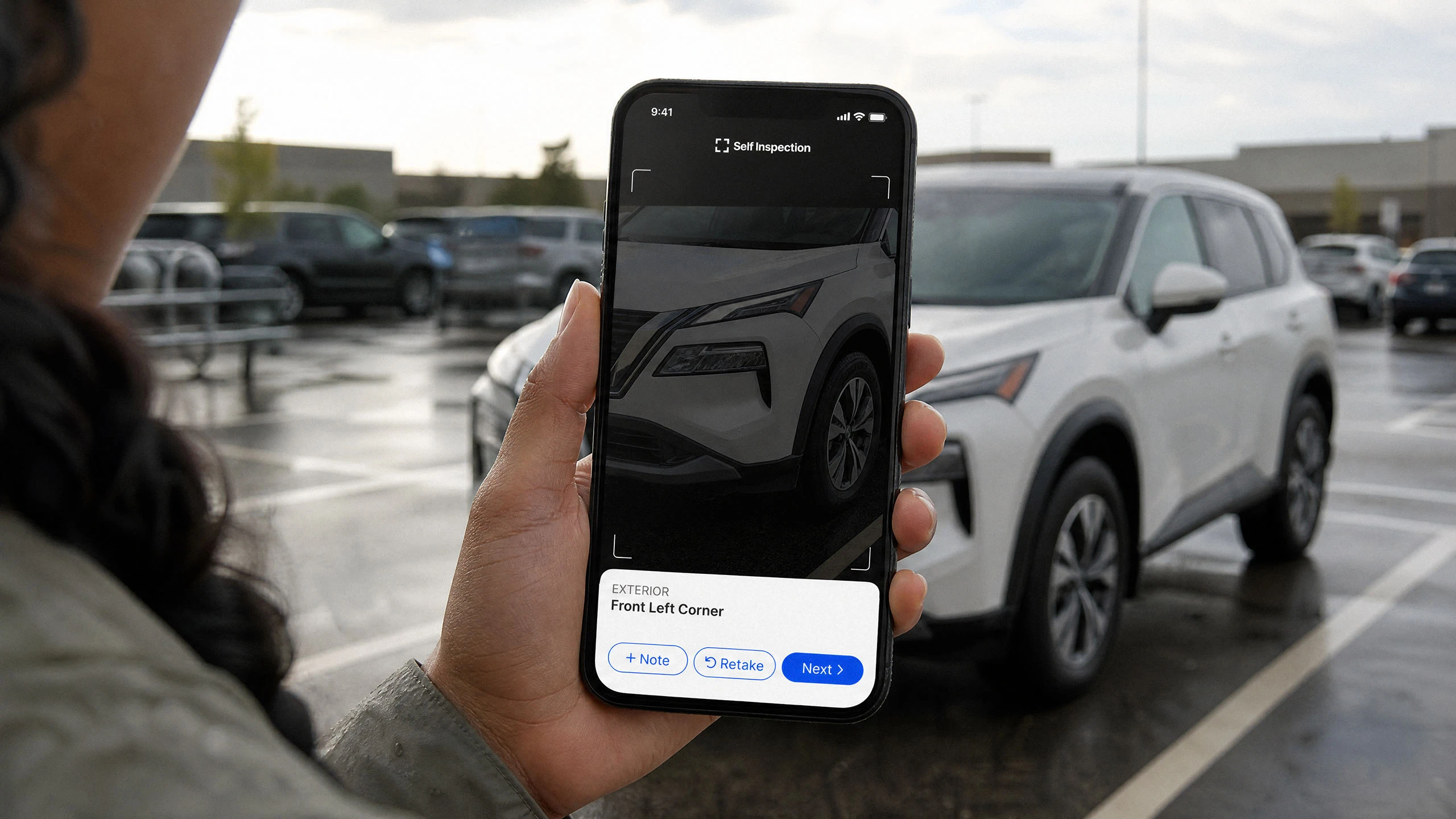
A high-touch lease needs a clear condition record at return.
Admiral Leasing - full-service vehicle lessor (U.S.)
Read case study

One state. Twelve counters. One condition standard.
Avis Alaska (Alaska Rent A Car, Inc.)
121,746Inspections delivered
Read case studyReady to get started?
Streamline lease returns, reduce disputes and accelerate remarketing readiness - all from one simple platform.