

AI tire scanning & tread depth inspection
Measure tread depth, classify wear patterns, and flag safety issues from phone photos. Built for tire shops, fleet operators, and rental operators.






How tire-only inspection works
A streamlined workflow for when only tire data is needed. Three steps, under a minute.
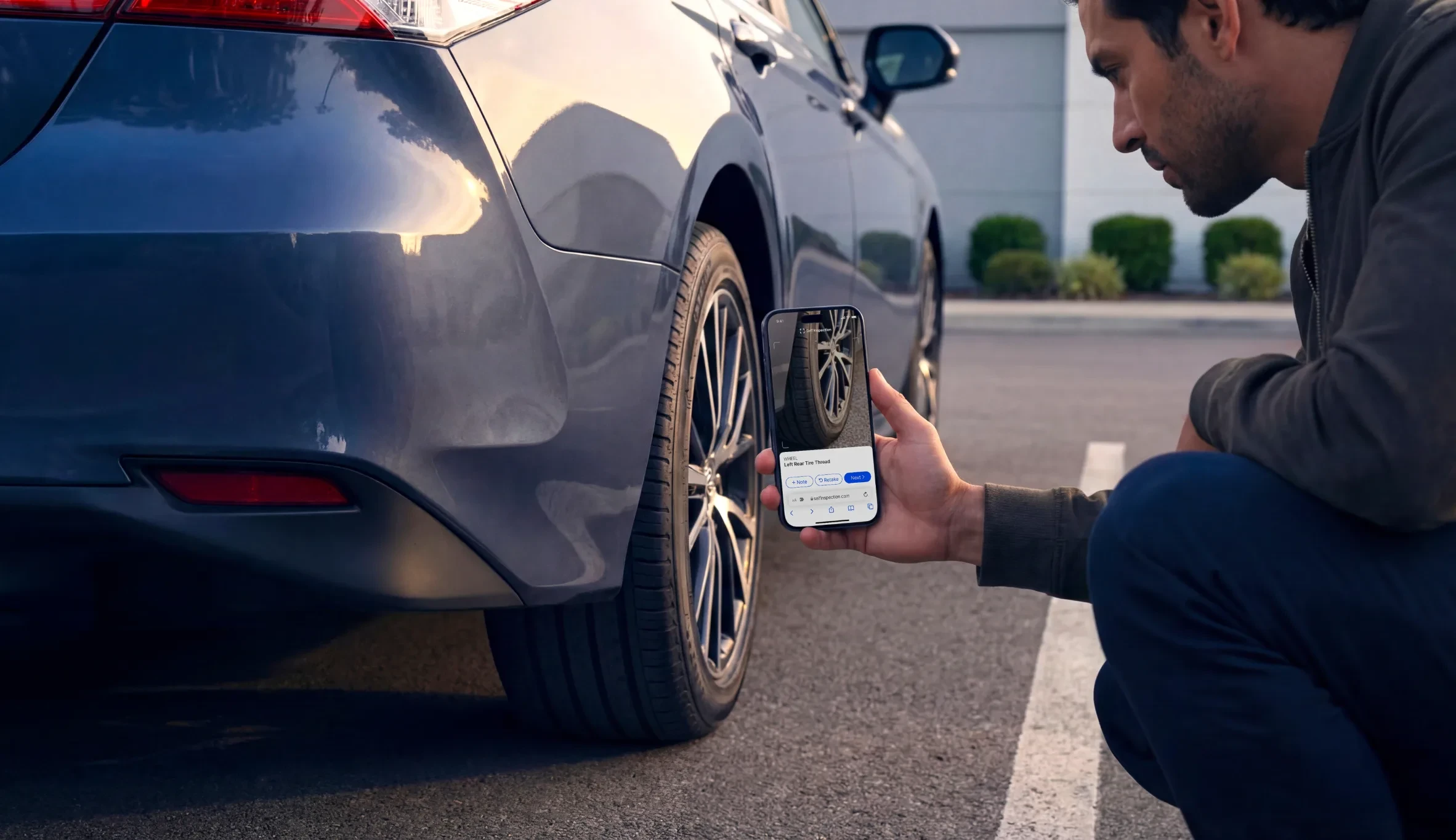
Four photos, one per tire, with guided angle prompts telling the user where to stand and how close to get. Bad angles are rejected at capture with a re-shoot prompt rather than surfacing as a failed inspection later.
Features built for tire inspection
From quick checks to proactive replacement decisions, tire condition is captured, analyzed, and tracked digitally.




Guided mobile tire capture
Users follow step-by-step prompts to capture consistent tire images from any phone, ensuring reliable inputs every time.

AI tread depth and wear analysis
Automated measurement of tread depth and detection of abnormal wear patterns, applied consistently across inspections.
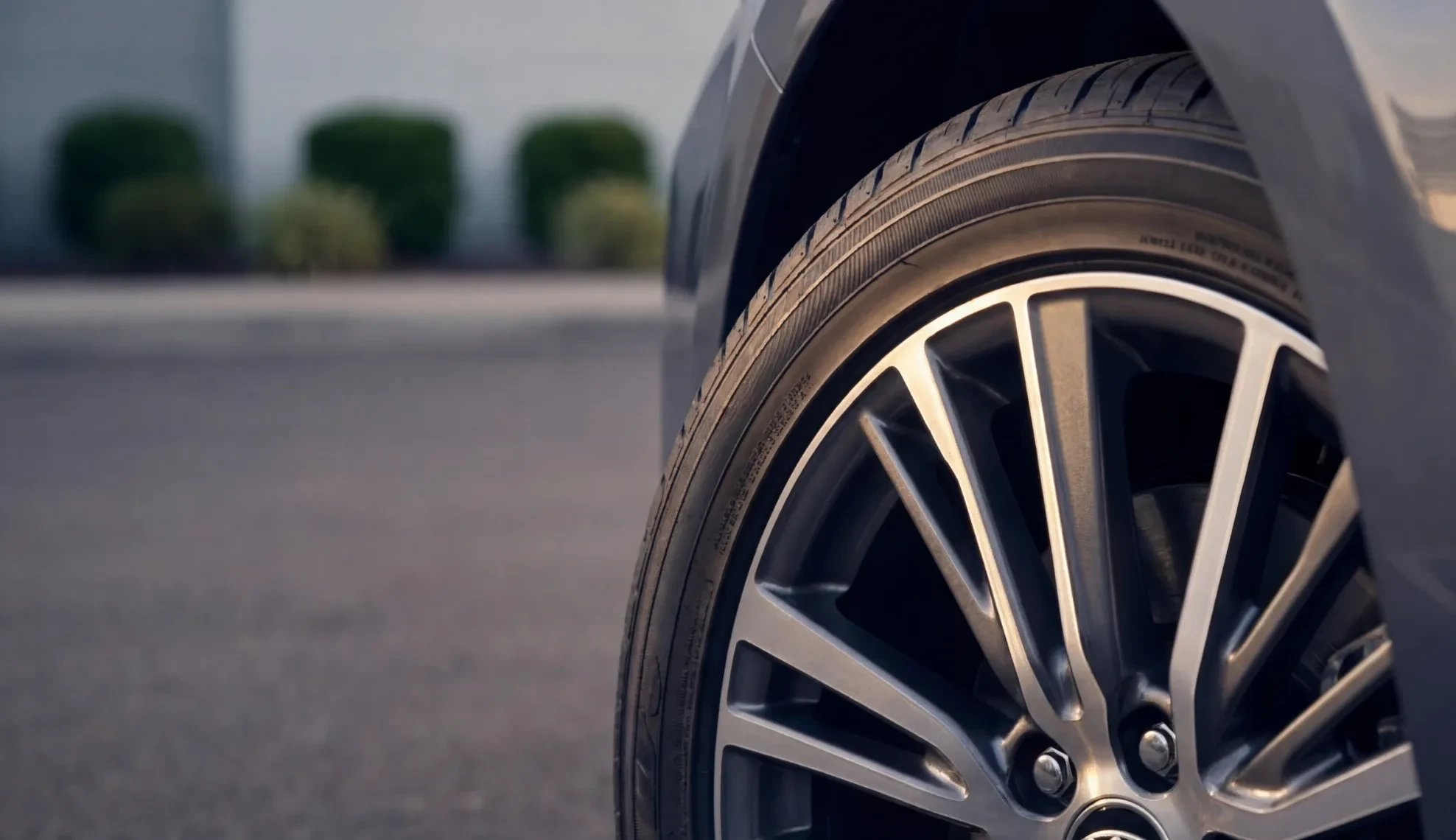
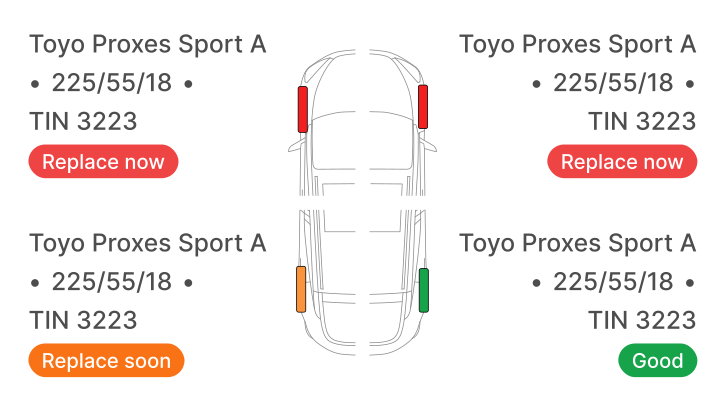
Photo-based replacement indicators
Clear thresholds for “Good”, “Monitor”, or “Replace” help teams and customers understand next steps instantly.
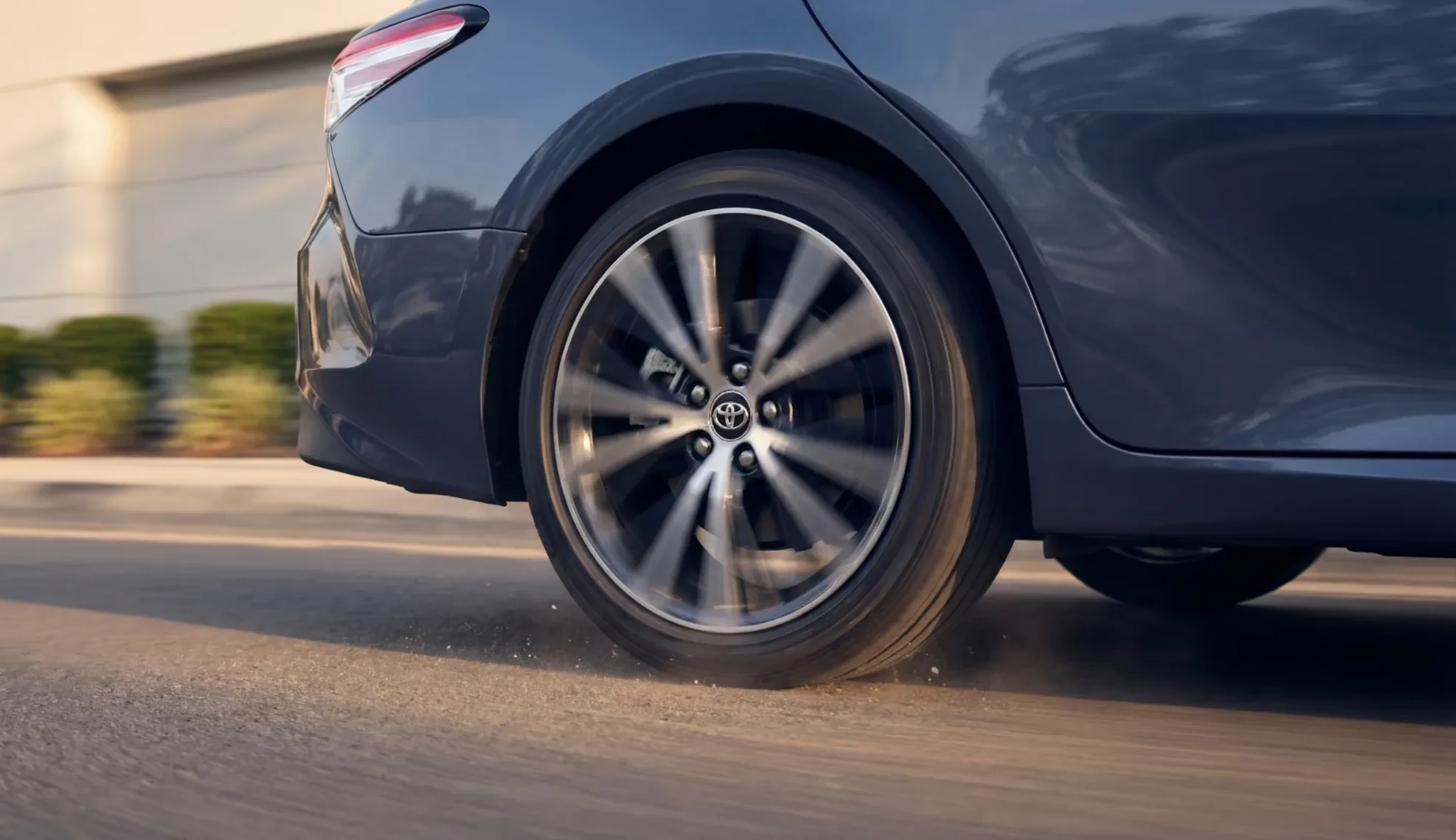
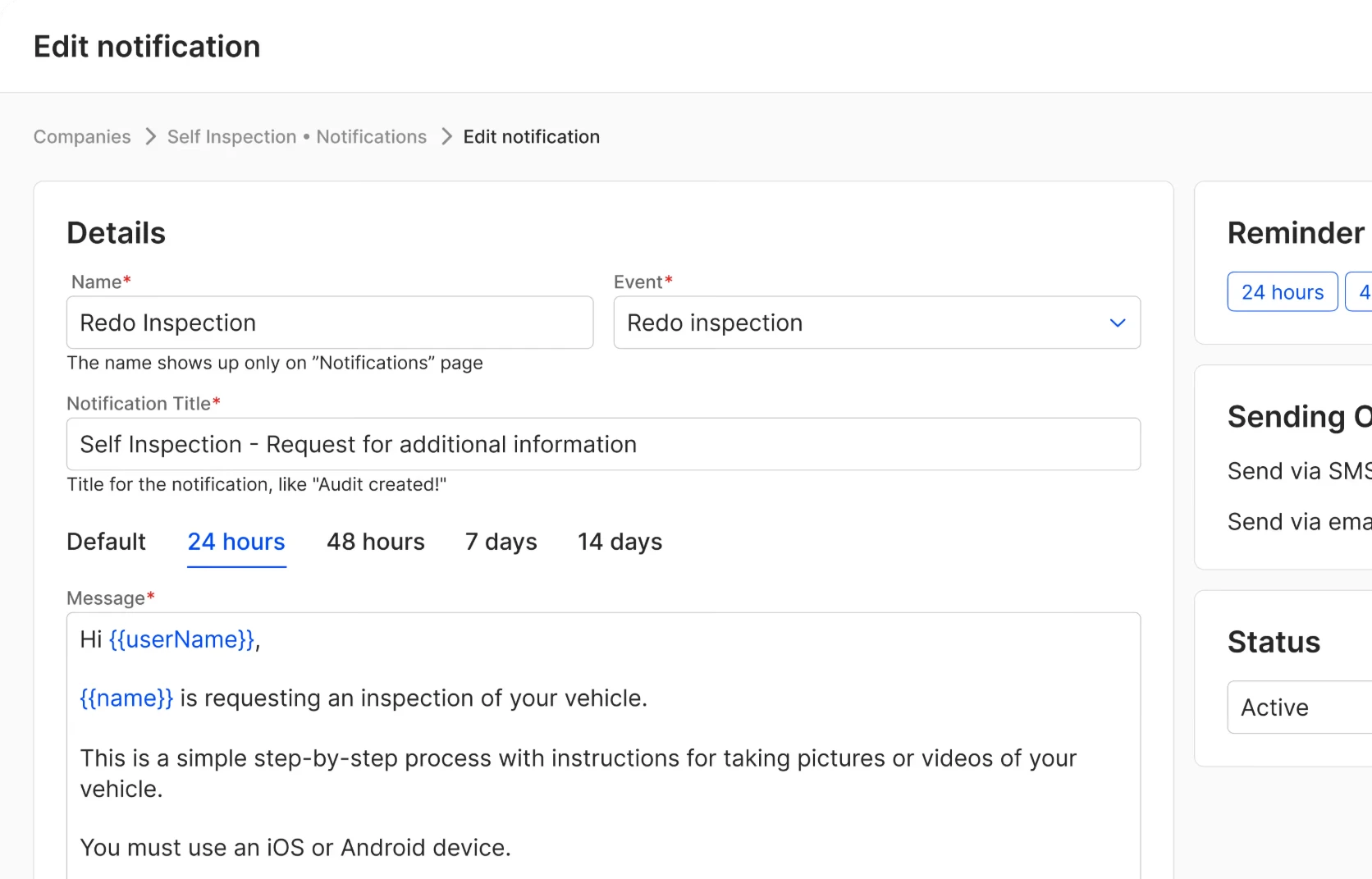
Notifications and reminders
Automated alerts when tires approach unsafe levels or scheduled inspections are due.
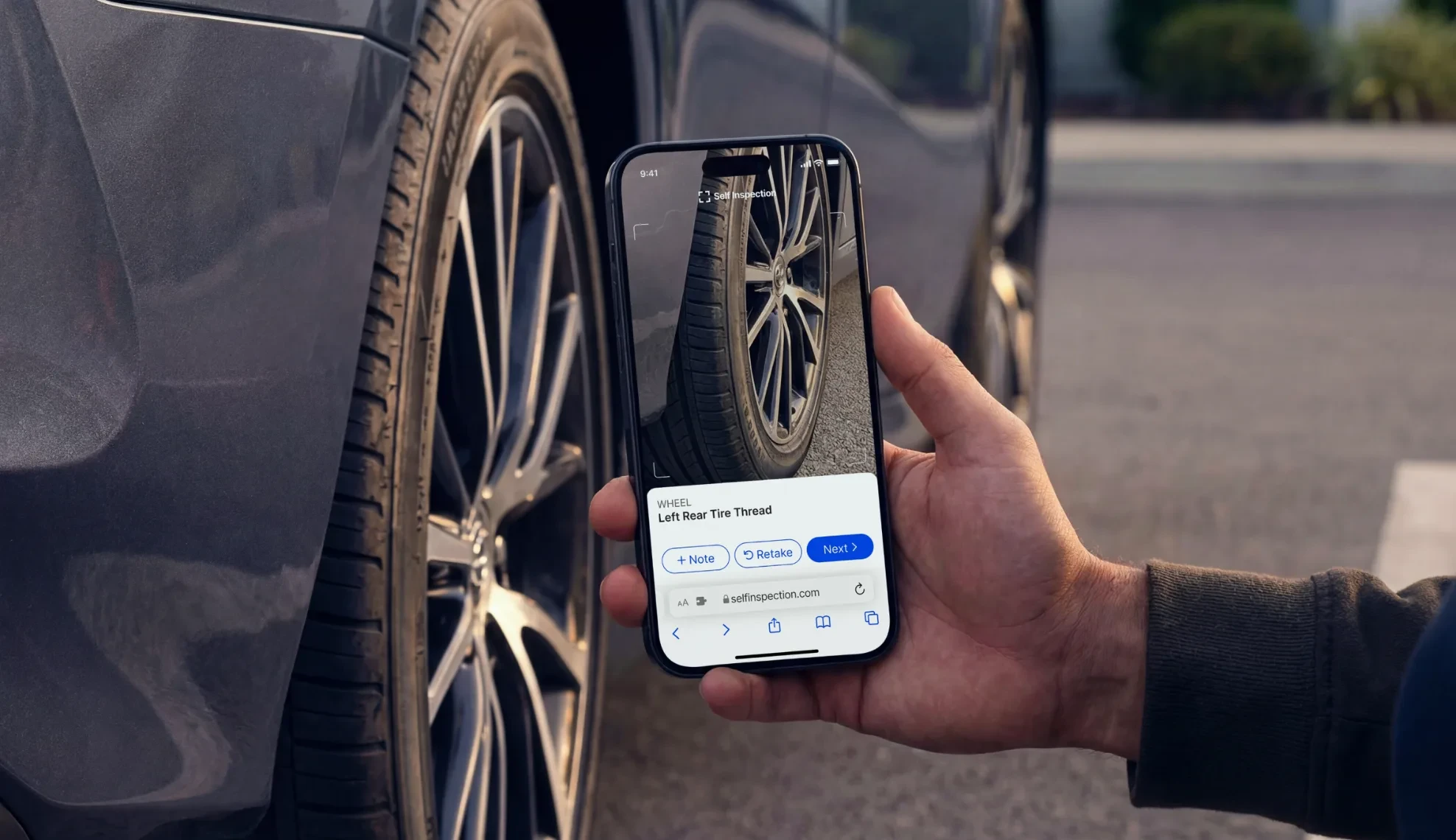
Works anywhere
Fully web-based. No apps, no devices, no integrations required to get started.
Auditability and history
Every tire inspection is time-stamped, stored, and linked to the vehicle, creating a continuous condition history.
Partner and system integrations
API-ready for manufacturer systems, warranty platforms, dealer tools, and CRM environments.
What the AI measures
Four categories, each one a decision a technician currently makes with a gauge, a flashlight, and an opinion.
Measured in millimeters for each of the four tires, accurate to within 0.5mm of a physical depth gauge. Because every tire is measured the same way every time, remaining life estimates are comparable across a fleet, across visits, and across whoever happened to hold the phone.
0.5mm
Within 0.5mm of a calibrated physical tread depth gauge
2,000+
Tires measured manually across multiple brands and tread patterns
<60s
Under 30 seconds of AI analysis, with the report delivered in under a minute
How accurate is the tread depth measurement?
This is the number the deal turns on, so here it is with its conditions attached.
Where a tire-only check earns its place
Tires are the one component that is checked constantly, documented rarely, and argued about afterward. A scan that takes under a minute is cheap enough to run every time the vehicle is touched, which is what turns tire condition from a spot judgment into a trend.

The technician runs a tire scan during an oil change or a brake job. Replacement opportunities surface with photographic evidence attached, which is a different conversation from a verbal recommendation delivered next to a lift.




“They needed a faster, standardized smartphone capture workflow that could run uniformly at every counter - while keeping damage assessment and repair-cost estimation as an internal task.”


“AI-driven Self Inspection cut their lease-end turnaround times by ~50%, with self-inspections completed in approximately 10 minutes via smartphone.”


“They turned on every Self Inspection capability - visual capture, AI damage detection, and outsourced repair-cost estimation - on day one.”
See it on your own vehicles
No credit card. No lengthy onboarding. See it in action in 20 minutes.

FAQ
Self Inspection's AI tread depth measurement is accurate to within 0.5mm of a physical tread depth gauge, validated on a sample of 2,000+ tires across multiple brands and tread patterns. This is sufficient accuracy for safety flagging (typical legal minimum is 3/32 inch or about 1.6mm) and for replacement timing decisions.
Tread depth (measured per tire), wear patterns (even, edge, center, cupping, feathering - each with diagnosis of likely cause), sidewall damage (cuts, bulges, cracks, dry rot), and mismatched tires on the same axle. Cross-tire pattern analysis (e.g., comparing all four tires) flags issues like alignment problems indirectly.
The platform produces photo-evidenced tire condition reports suitable for DOT pre-trip inspection documentation. Specific compliance requirements vary by jurisdiction - book a demo to confirm fit with your compliance requirements.
Capture is 4 photos (one per tire), followed by under 30 seconds of AI analysis, with the report delivered in under a minute. This makes tire-only inspections fast enough to integrate into routine service workflows like oil changes.
Yes. Many tire shops run a tire-only inspection during routine service (oil changes, brake jobs) and surface tire replacement recommendations with documented evidence. This converts inspection findings into customer-facing service recommendations with photo evidence - much more credible than inspector verbal recommendations.
No. The same browser-based capture flow that works for full vehicle inspection works for tire inspection. Any modern phone camera produces sufficient image quality for accurate tread depth measurement. No tread depth gauges, no specialty cameras, no laser sensors required.
Yes. A full Self Inspection vehicle inspection includes tire data alongside body damage. Tire-only mode is a streamlined workflow when only tire data is needed (e.g., during routine tire shop visits). Both produce compatible reports - tire findings are surfaced in the same format whether they're part of a full inspection or a tire-only one.