


After the trail, start with the pickup photos
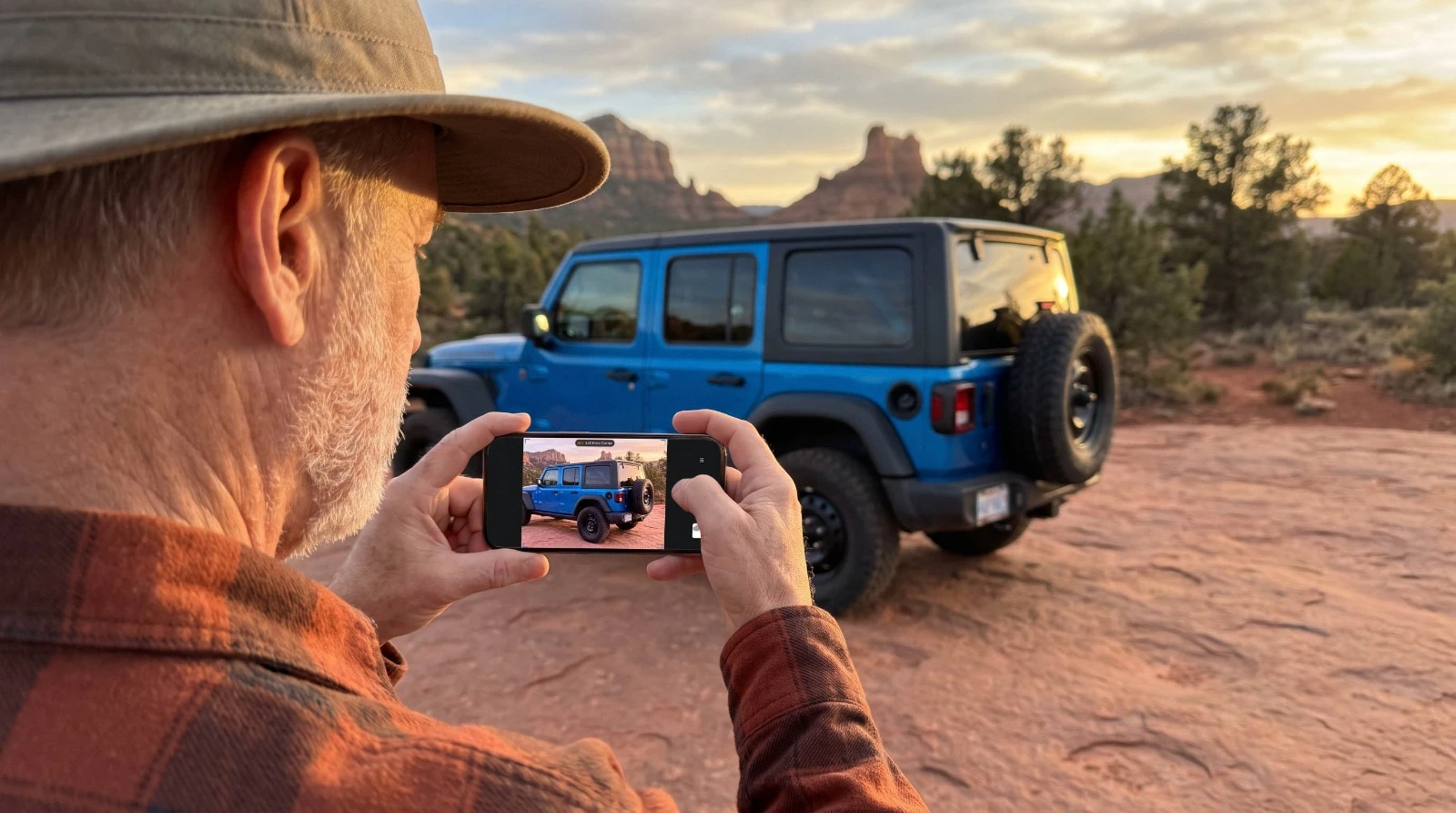
“Canyonlands Jeep and Car Rentals uses Self Inspection at check-out and check-in. At its Moab, Utah operation, the condition review after a trip can start with photos taken before the keys changed hands. Staff can see what was recorded then and what needs a closer look now.”
Canyonlands rents Jeeps and Broncos for self-guided trips, alongside cars, SUVs and passenger vans. For its off-road rentals, the review needs to account for the parts that meet the trail, as well as the windshield.
Before the Jeep leaves
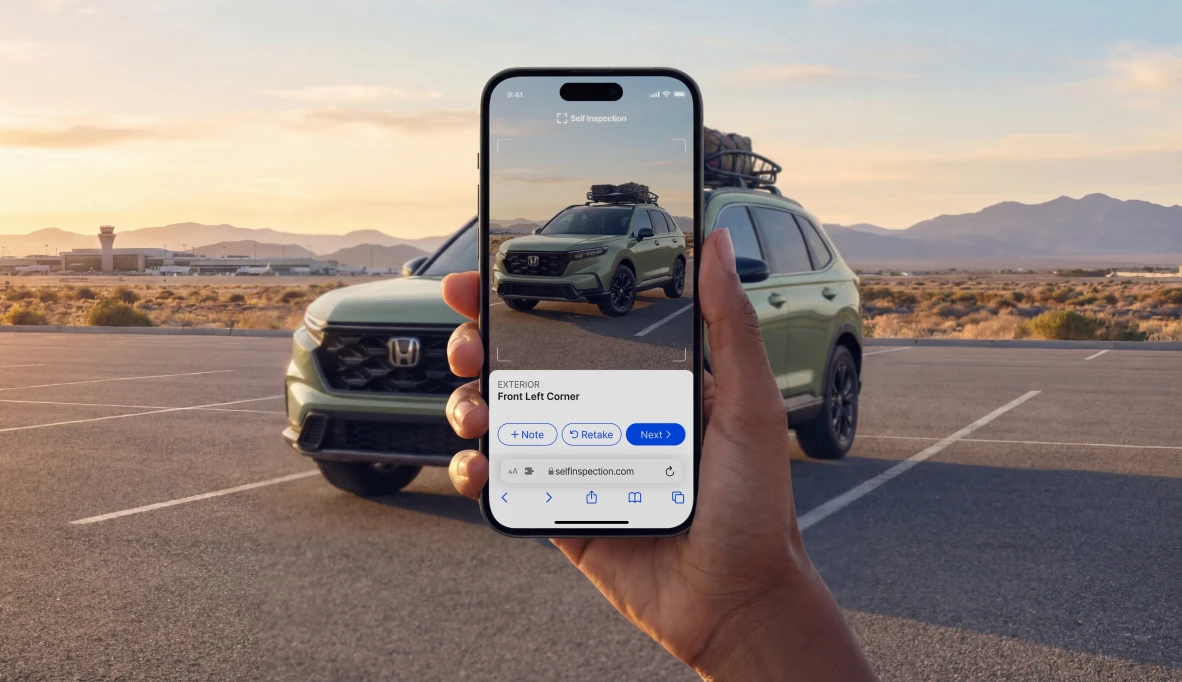
At check-out, the renter uses Self Inspection on their phone to photograph the Jeep before driving away. Prompts show which views to take, and image quality checks flag photos that need to be retaken. Staff receive a timestamped condition record they can open at check-in to see what was already there before the trip when reviewing a damage finding.
An exterior capture can document visible bumpers, rockers and tire sidewalls alongside the windshield. Those areas matter on an off-road rental, where a rock can leave damage low on the vehicle. Skid plates and the undercarriage need their own images or a separate hands-on check. A walkaround does not establish the condition of areas the photos cannot show.
Mud changes what staff can see
A Jeep can return with red dirt and mud covering a scrape. Photographing it immediately may leave that damage hidden. If the vehicle needs cleaning first, check-in photos may be taken after the wash at drop-off. The photos record the condition visible at that point, and the capture time helps staff explain when the inspection happened.
Self Inspection analyzes the check-in images and compares them with the check-out record, panel by panel, to flag possible new damage. Its verification workflow adds an expert review of flagged findings against the source images. Staff see the reviewed finding in the condition report, linked to the photo, vehicle location and severity.
That gives staff a specific area to check. If the check-out photo does not show a rocker clearly, the report cannot settle whether a scrape there happened during the rental. Staff need to take that gap into account before pursuing a damage claim.
A chip can become a crack during the trip
Consider a windshield chip that develops into a crack while the Jeep is out. A timestamped check-out photo showing the chip lets staff see the earlier damage and compare it with the crack at check-in. They can show the renter both images and explain what changed. That earlier view gives them a way to discuss the damage without relying on memory alone.
Canyonlands sells one-time windshield and tire coverage. A windshield or tire finding therefore needs to be reviewed alongside the renter’s selected coverage and the damage waiver terms before staff decide how to handle it.
Where repair costing is included, an estimated repair cost adds context for that review. Staff decide whether to pursue a customer charge under the rental agreement.
Verifying visible damage and deciding what a renter owes are separate steps.
Self Inspection keeps the photos and reviewed findings together for that decision. Staff can use the same report when explaining a damage claim, reviewing a repair or preparing the Jeep for its next booking. The check-out record gives them a starting point they can show the renter.
Book a demo of pickup, return and damage review.
More case studies
All case studies

Lease-end could not depend on where a member lived.
Credit Union - indirect leasing program
51,557Inspections delivered
Read case study

One state. Twelve counters. One condition standard.
Avis Alaska (Alaska Rent A Car, Inc.)
121,746Inspections delivered
Read case study
The last manual step in a digital operation.
Auto360 Limited - UK commercial vehicle rental & repair
802Inspections delivered
Read case studyReady to get started?
Streamline lease returns, reduce disputes and accelerate remarketing readiness - all from one simple platform.