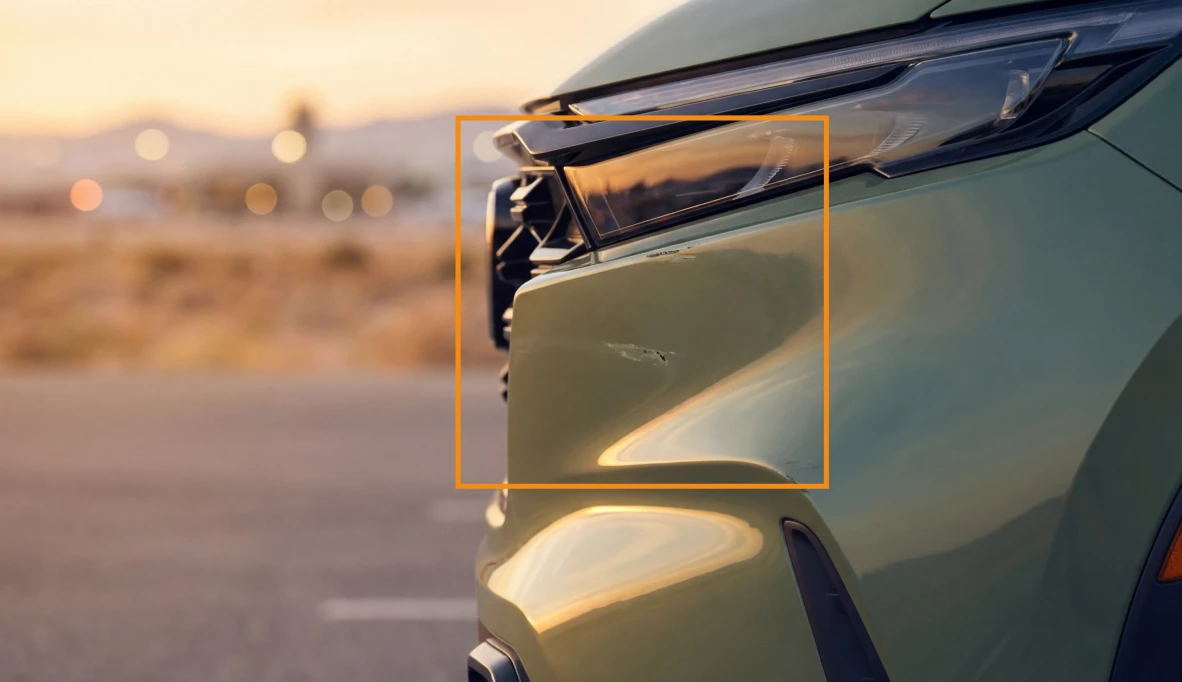
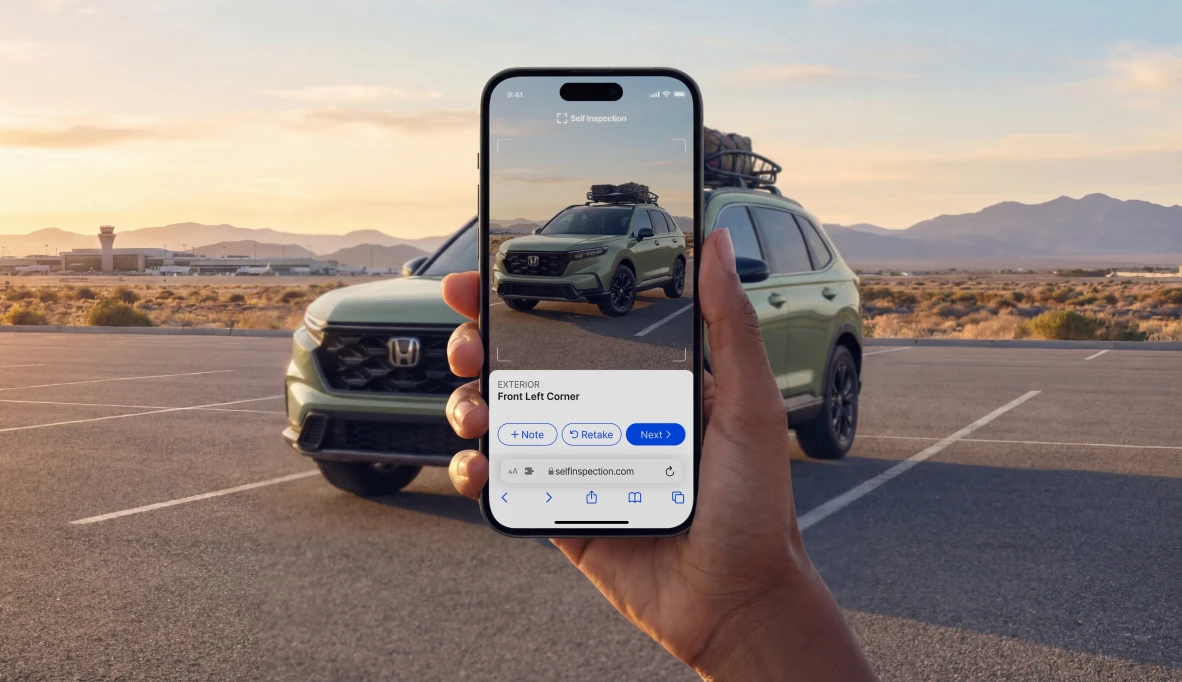
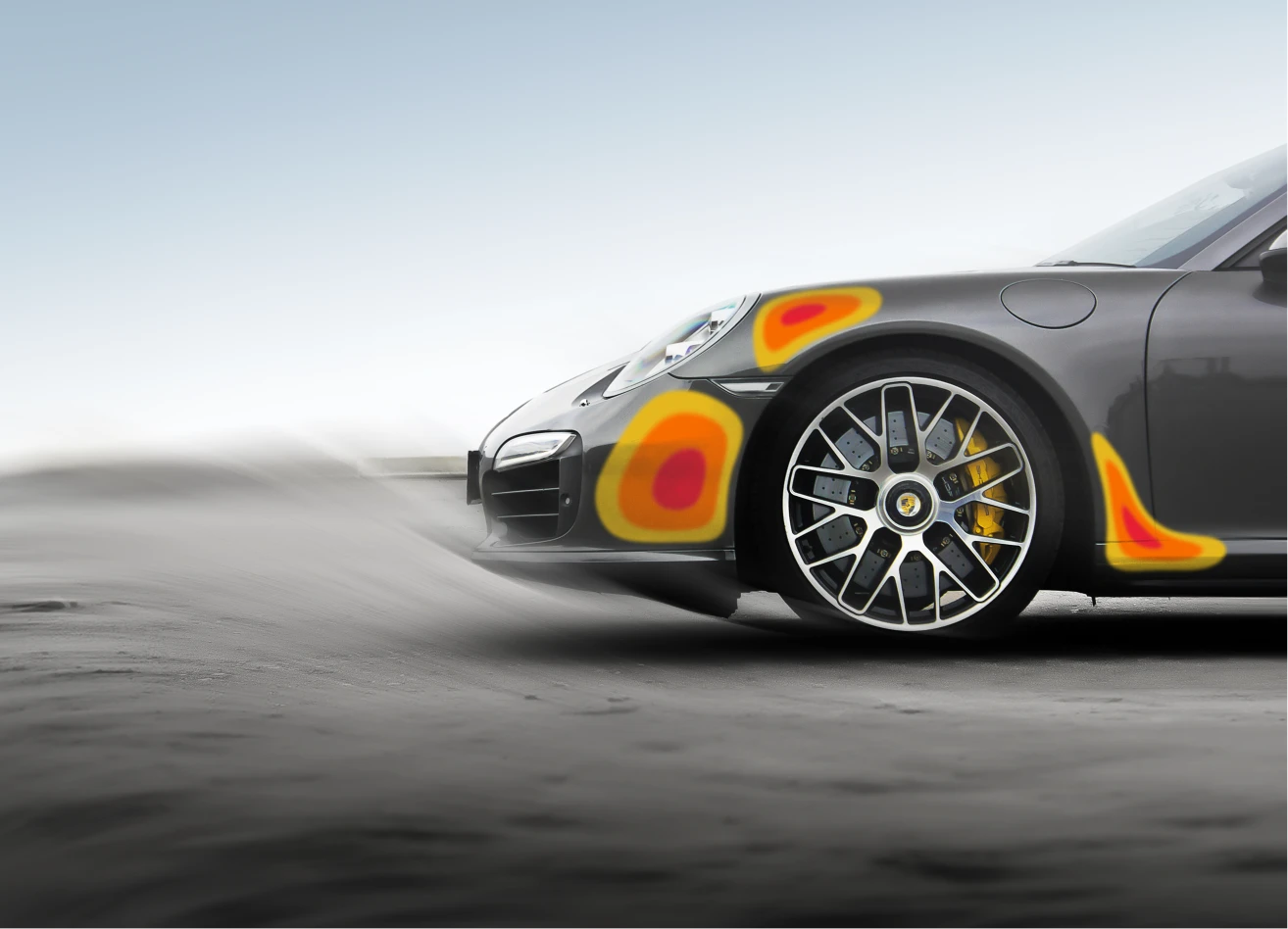

Pick the category before you pick the vendor
AI software on a phone, pre-installed hardware in a fixed lane, or a trained human with a clipboard. They are not interchangeable, and each is genuinely right somewhere.
Where do your inspections physically happen?
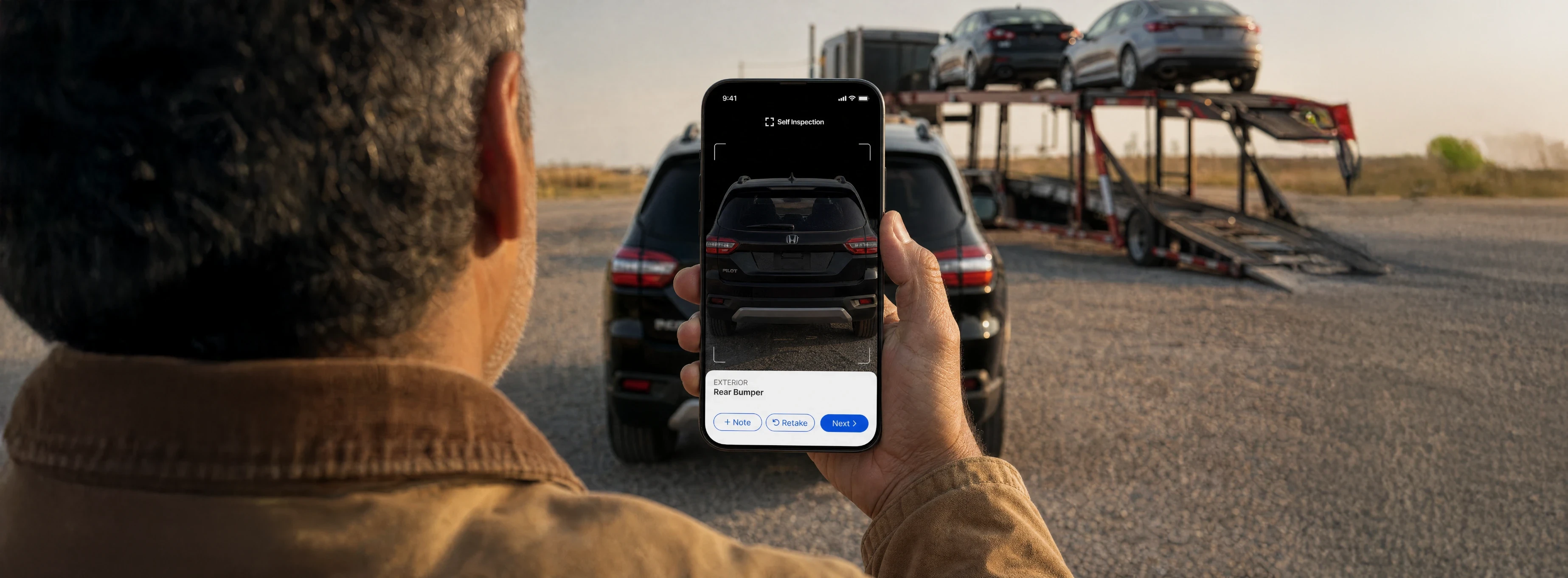
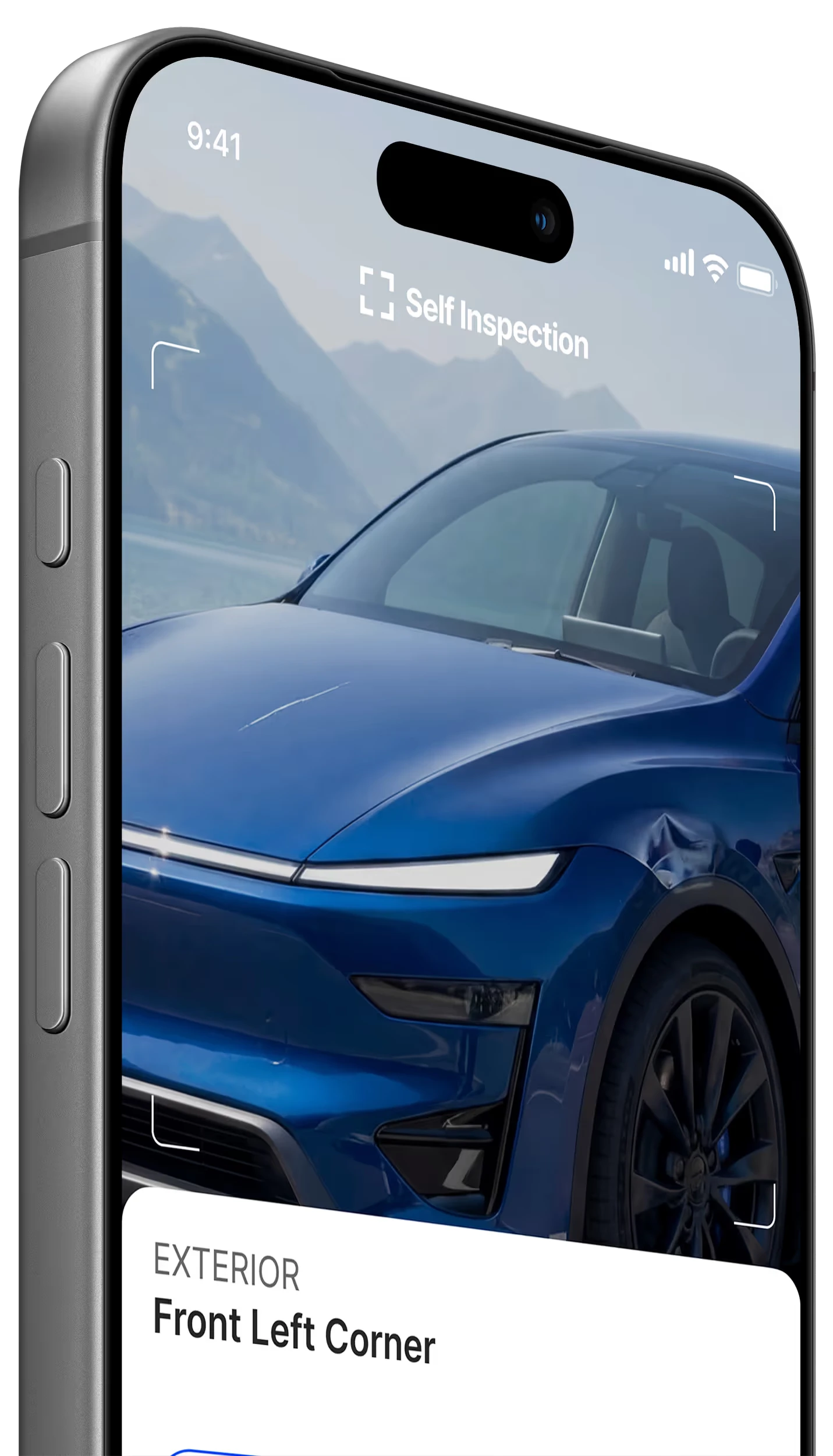
If vehicles are inspected in many places - return lots, dealer lots, driveways, transport yards - AI inspection software is the only category that deploys everywhere, because the capture device is a phone. If every vehicle passes one fixed point at high volume, pre-installed inspection hardware scans faster per vehicle. Self Inspection is AI inspection software, built for the distributed and customer-facing case.
Which category fits your operation?
Buying the wrong category is expensive in a way that buying the wrong vendor inside one is not. Pick the profile that describes your inspections.
AI inspection software
The capture device is a phone already in someone's hand, so a new location costs nothing to add. This is the category Self Inspection is in.
You are in this profile if
- Inspections happen at distributed locations, not one site
- The inspection is customer-facing - rental return, lease return, marketplace listing
- There is no fixed inspection lane, and no budget to build one
- Capture on a phone is acceptable to whoever is doing it
Trade-off: a few minutes per vehicle rather than under 60 seconds, and no undercarriage scan.
The three categories, side by side
Categories, not products. The named comparisons below go product by product.
For most operations AI software is the right answer. For single-site high throughput, pre-installed hardware can be. For low-volume specialty work, a human inspector still has a place.
Named comparisons
Product by product, including the cases where the other option is the better buy.
Self Inspection vs. Ravin AI
The closest direct comparison - two AI inspection platforms serving rental, dealer, and finance, feature by feature.
Read the comparisonSoftware vs. hardwareSelf Inspection vs. UVeye
Different categories that land in the same evaluation. Where a scanning lane wins, where browser capture wins, and how some operations run both.
Read the comparisonAI vs. status quoAI inspection vs. manual inspection
What actually changes when AI replaces a clipboard - and the cases where a human inspector is still the answer.
Read the comparisonWhere Self Inspection fits
AI software, alongside Ravin AI. Five things separate it within that category.
- Training data
- 20M+ labeled vehicle images.
- Capture
- Any phone browser. No install, no device provisioning.
- Review
- AI detection plus certified expert review on every inspection.
- Coverage
- 6,000+ damage type, location, and severity combinations.
- Scale
- 1M+ inspections completed.
A certified human reviews findings before the report is released - which is what makes the 99% delivered accuracy figure hold up under dispute.
Who ran this decision, and where they landed
Three enterprises that chose software.

“They needed a faster, standardized smartphone capture workflow that could run uniformly at every counter - while keeping damage assessment and repair-cost estimation as an internal task.”


“AI-driven Self Inspection cut their lease-end turnaround times by ~50%, with self-inspections completed in approximately 10 minutes via smartphone.”


“They turned on every Self Inspection capability - visual capture, AI damage detection, and outsourced repair-cost estimation - on day one.”
Still deciding between categories?
Bring your volume, your locations, and one representative vehicle. Twenty minutes is usually enough to tell you which category fits - including when the answer is not us.
FAQ
AI inspection software runs damage detection on photos captured from any phone - no specialized hardware. Pre-installed inspection hardware installs a fixed lane with cameras and sensors that vehicles drive through. Software fits distributed and customer-facing inspections; hardware fits single-site, high-throughput intake like a body shop or a large service drive.
Per vehicle, hardware is faster: under 60 seconds in a tunnel scan, against a few minutes from phone capture to delivered report. But hardware needs the vehicle to physically reach the lane; software runs anywhere there is a phone, which is faster end to end for distributed and customer-facing use.
At very low volume (under roughly 10 inspections a month), for specialty vehicles outside AI training scope - motorcycles, marine, specialty fleet equipment - or where regulation requires a licensed inspector sign-off. For general passenger and light commercial vehicles, AI is faster, cheaper, and more consistent.
Yes. Some customers run hardware at a high-throughput central facility, such as the main rental return depot, and software at distributed satellite locations. Self Inspection condition reports and the API work alongside that kind of mixed deployment.
Cost per inspection drops, scoring is the same across every inspection and location, and a delivered report takes minutes instead of waiting on dispatch. Disputes drop too, because every inspection carries timestamped photo evidence and a structured damage report.