


When the cars cost more, the evidence matters more.

- Inspections delivered
- 7,195
- Average inspection time, vs. 30–45 min manual
- 6 min 40 s
- Estimated counter time saved
- ~3,700 hrs
“Fat Uncle Auto needed one condition standard for a high-value fleet operating across 6+ U.S. cities.”
A small inconsistency can become an expensive question.
High-value vehicles raise the stakes at every handoff
Fat Uncle Auto operates a luxury and exotic rental network with roughly 1,000 vehicles across multiple U.S. cities. The fleet includes Mercedes, BMW, Porsche, Lamborghini, Ferrari and Rolls-Royce models. When the vehicle itself carries more value, even a relatively small damage question can become a higher-friction conversation at check-out or return.
Six cities could not mean six documentation standards
Different locations were documenting vehicles in slightly different ways, from photo angles to damage notation. That made it harder to compare condition evidence when vehicles moved through a multi-city operation. Fat Uncle Auto needed the same capture standard at every counter, not a different process depending on who was working or where the vehicle was returned.
The repair estimate needed distance from the repair decision
When Fat Uncle Auto staff produced the repair estimate themselves, renters or insurers could question the number as self-interested. On an exotic vehicle, where repair costs can be significant, that made the claims conversation harder. The team needed an independent repair-cost reference without giving up control of its day-to-day damage review.
What Fat Uncle Auto actually needed
Not just faster inspections. One repeatable condition process across every city, with an independent repair-cost step when a claim followed.
The goal was to make every handoff easier to document and easier to review later. That meant giving staff the same guided capture flow across the network, keeping damage reporting in-house, and separating the repair-cost estimate from the team involved in the rental.
“The requirement: one repeatable condition workflow across every city, with staff-controlled damage review and an independent repair-cost estimate when a claim followed.”
Building one standard across the network
1. Standardize the capture
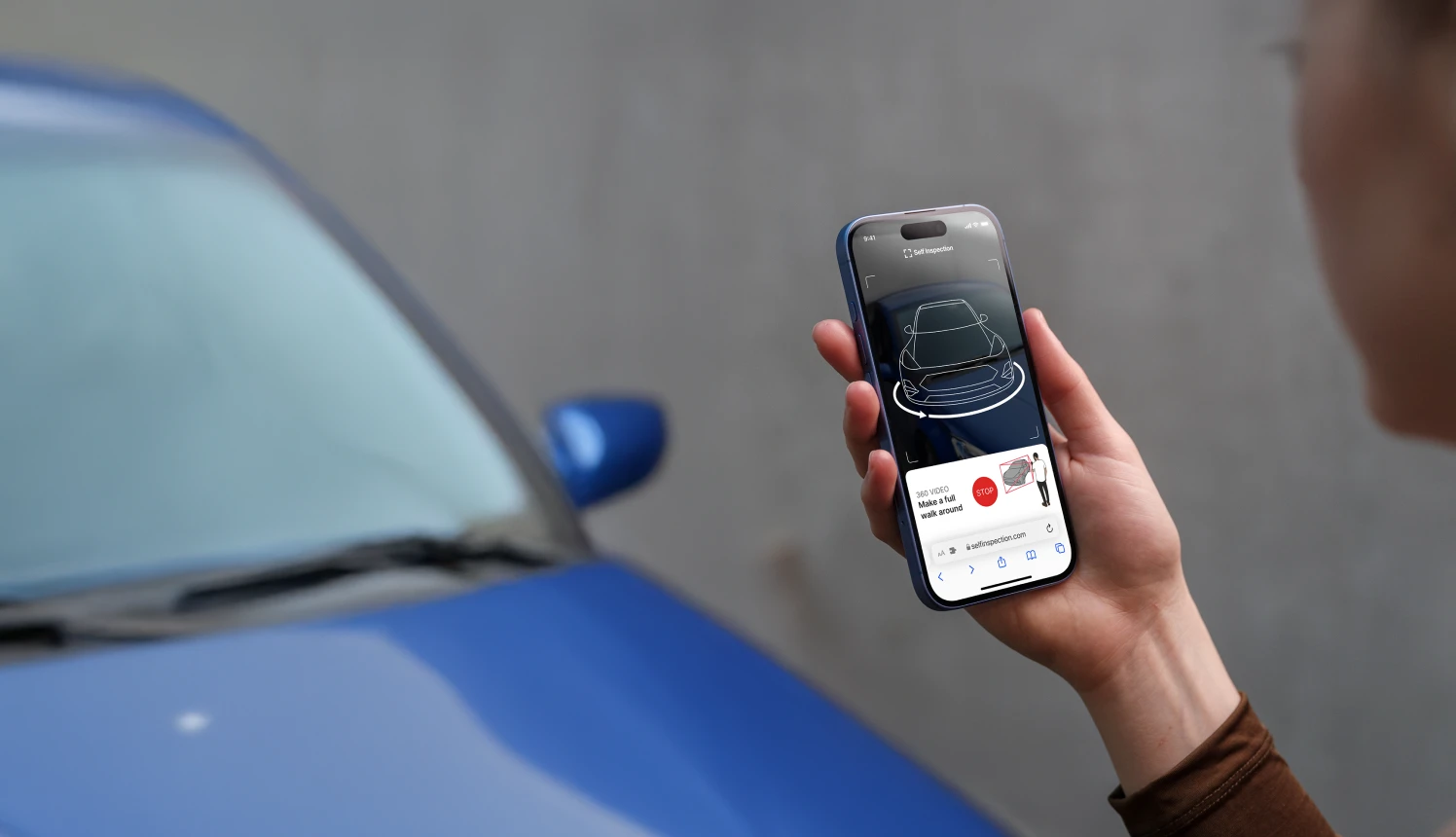
Staff follow the same guided photo and video walk-around at each location. The process creates a more consistent record across cities instead of relying on different local photo habits, paper notes or folder structures.
2. Keep damage review with the team
Fat Uncle Auto staff continue to flag damage themselves using the captured imagery. Self Inspection provides the structured capture layer while the operator keeps responsibility for the damage assessment inside the business.
3. Make the repair-cost estimate independent
When reported damage needs a repair-cost estimate, Self Inspection's insurance-trained evaluators provide the estimate as a third-party step. That gives Fat Uncle Auto an independent reference point for the repair-cost conversation with renters and insurers.
Together, those steps created one repeatable condition workflow across a multi-city luxury rental operation, while preserving the parts of the process Fat Uncle Auto wanted to keep in-house.
From one counter to a multi-city standard
The program expanded in stages, then became the default check-out and return workflow across 6+ city counters.
| When | Milestone | What changed |
|---|---|---|
| Apr 30, 2025 | Pilot launch | First live inspection completed at a Fat Uncle Auto counter. |
| Mid 2025 | Multi-city rollout | Capture workflow standardized across Los Angeles, San Francisco, Las Vegas, Seattle, New York and Boston. |
| Summer 2025 | First peak season | Workflow tested through its first travel season at full multi-city scale. |
| Late 2025 | 3rd-party estimates | Repair-cost estimation added through Self Inspection evaluators. |
| 2026 | Default workflow | Standard check-out and return workflow in place at every city counter. |
| Jun 23, 2026 | 7,195 inspections | Program reached 7,195 inspections at roughly 17 inspections per day. |
What changed
Fourteen months of program data show adoption across cities, faster inspection time and a standardized operating model.
From April 30, 2025 through June 23, 2026, Fat Uncle Auto completed 7,195 inspections across 6+ cities. Average inspection time was 6 minutes 40 seconds, compared with a 30 to 45 minute manual inspection benchmark. Based on that benchmark, the program estimates roughly 3,700 counter hours saved during the period.
By 2026, the workflow had become the standard check-out and return process across the network. The change was bigger than moving inspection onto a phone. Fat Uncle Auto created one condition-capture standard across a high-value fleet while keeping damage review in-house and adding an independent repair-cost step when needed.
One condition standard for a high-value fleet.
For Fat Uncle Auto, the problem was never just inspection speed. It was making sure a vehicle in Los Angeles could be documented to the same standard as one in New York, Las Vegas or Seattle, and that a repair-cost conversation could start from an independent reference point. The result is a condition workflow built for a multi-city luxury rental operation.
More case studies
All case studies

Lease-end could not depend on where a member lived.
Credit Union - indirect leasing program
51,557Inspections delivered
Read case study
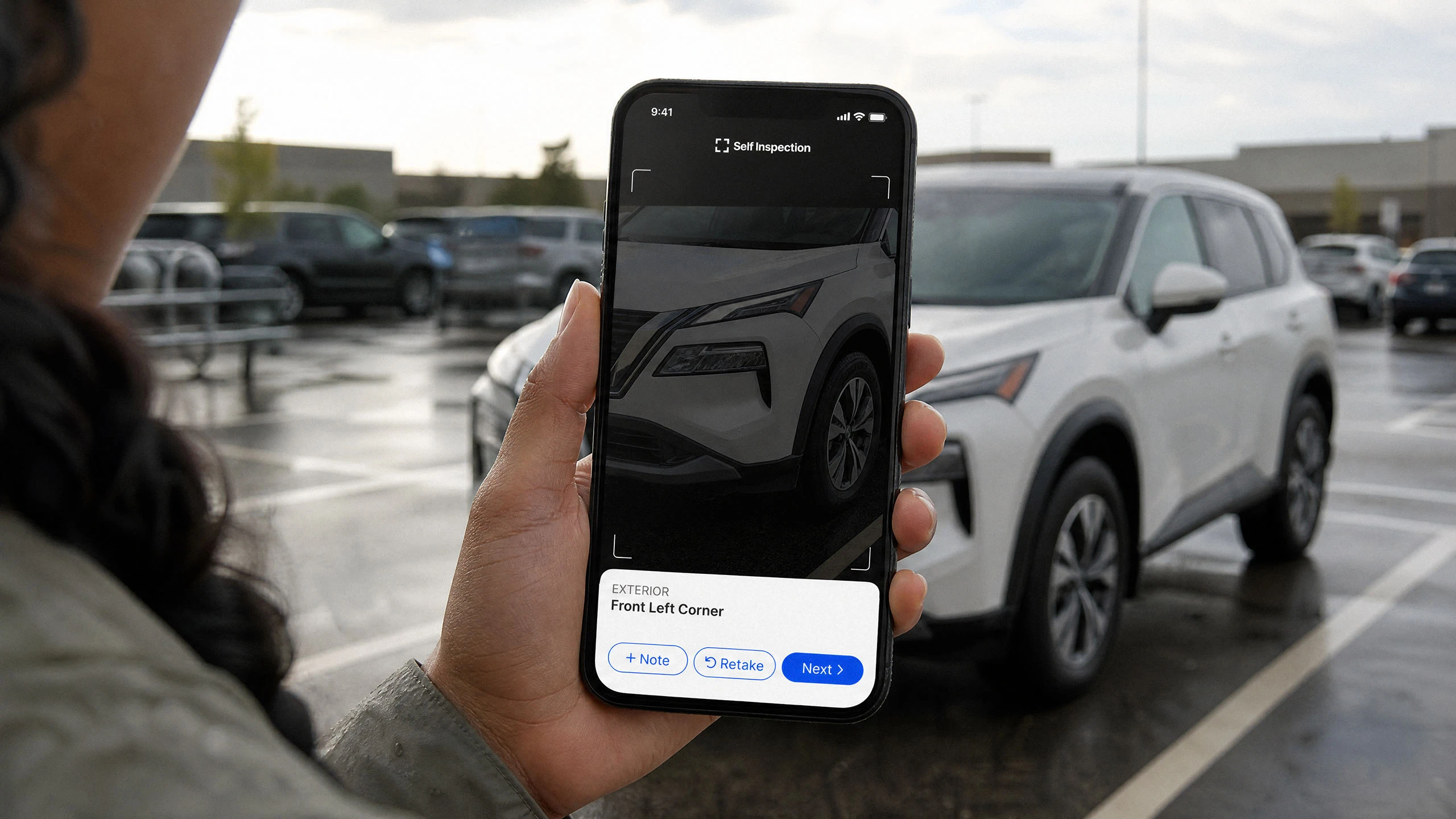
A high-touch lease needs a clear condition record at return.
Admiral Leasing - full-service vehicle lessor (U.S.)
Read case study

One state. Twelve counters. One condition standard.
Avis Alaska (Alaska Rent A Car, Inc.)
121,746Inspections delivered
Read case studyReady to get started?
Streamline lease returns, reduce disputes and accelerate remarketing readiness - all from one simple platform.