The future of automated vehicle inspections: 2030 roadmap to full autonomy

What does it take to secure $3 million in seed funding from leading venture capital firms in today's competitive automotive technology landscape? It’s all about demonstrating real-world results that transform how entire industries operate.
Today's automated vehicle inspection systems aren't just theoretical tools - they're operating systems delivering measurable results across major automotive operations:
- Enterprise Adoption: Rental car giant Avis relies on Self Inspection's technology for consistent fleet assessments.
- Marketplace Integration: CarGurus' wholesale platform CarOffer uses automated inspections to streamline vehicle valuations.
- Financial Institution Trust: Investor Westlake Financial integrates Self Inspection across multiple business units, reporting significant operational value.
The transition from manual to automated vehicle inspections delivers quantifiable business impact:
- Speed Enhancement: 3x faster inspections - reducing assessment time from 45 minutes to 15 minutes per vehicle.
- Accuracy Achievement: Over 85% accuracy through expert verification, setting industry-leading standards.
- Scalability Solution: Process multiple vehicles simultaneously without proportional staffing increases.
Our achievements establish the foundation for full automation by 2030, when intelligent systems will handle complete inspection workflows with minimal human oversight.
Curious to see what the future holds for autonomous vehicle inspections? Read on.

The automation evolution: From manual inefficiency to AI intelligence
Why do manual inspections remain the biggest operational bottleneck in automotive operations?
It’s because of fundamental limitations, understaffing and other operational issues that they bring to your workflows.
Traditional manual inspection challenges:
- Time Inefficiency: Complex inspections can take weeks to complete when scheduling conflicts, travel logistics, staffing problems and documentation delays compound.
- Human Error Susceptibility: Subjective assessments vary significantly between inspectors, creating inconsistent valuations and potential disputes.
- Scalability Constraints: Each additional vehicle requires proportional increases in personnel, making growth expensive and logistically complex.
- Documentation Inconsistencies: Paper-based or basic digital reports lack standardization, creating gaps in condition tracking.
So how exactly do autonomous vehicle inspection systems fix these problems?
Benefits of automated vehicle inspections disrupting manual workflows:
Modern automotive experts recognize that the days of manual inspections are already behind. With the industry now growing into billion-dollar valuations, there are three critical factors are accelerating the shift toward automated vehicle inspections:
- Cost Pressure: Rising labor costs and operational inefficiencies demand technology solutions that deliver immediate ROI. Automated inspection solutions, on the other hand, help your vehicle inspectors focus on what really matters - delivering accurate assessments quickly.
- Accuracy Demands: Stakeholders require consistent, objective assessments that eliminate human bias and subjectivity. Since automotive damage AI is trained on large datasets - they ensure accuracy and consistency naked eye can’t deliver.
- Scalability Requirements: Growing fleets and transaction volumes exceed manual inspection capabilities. With automated reporting and streamlined workflows - automotive inspectors can process many more vehicles at scale.
The convergence of these pressures creates an inevitable market shift toward automation that benefits every stakeholder in the automotive ecosystem.
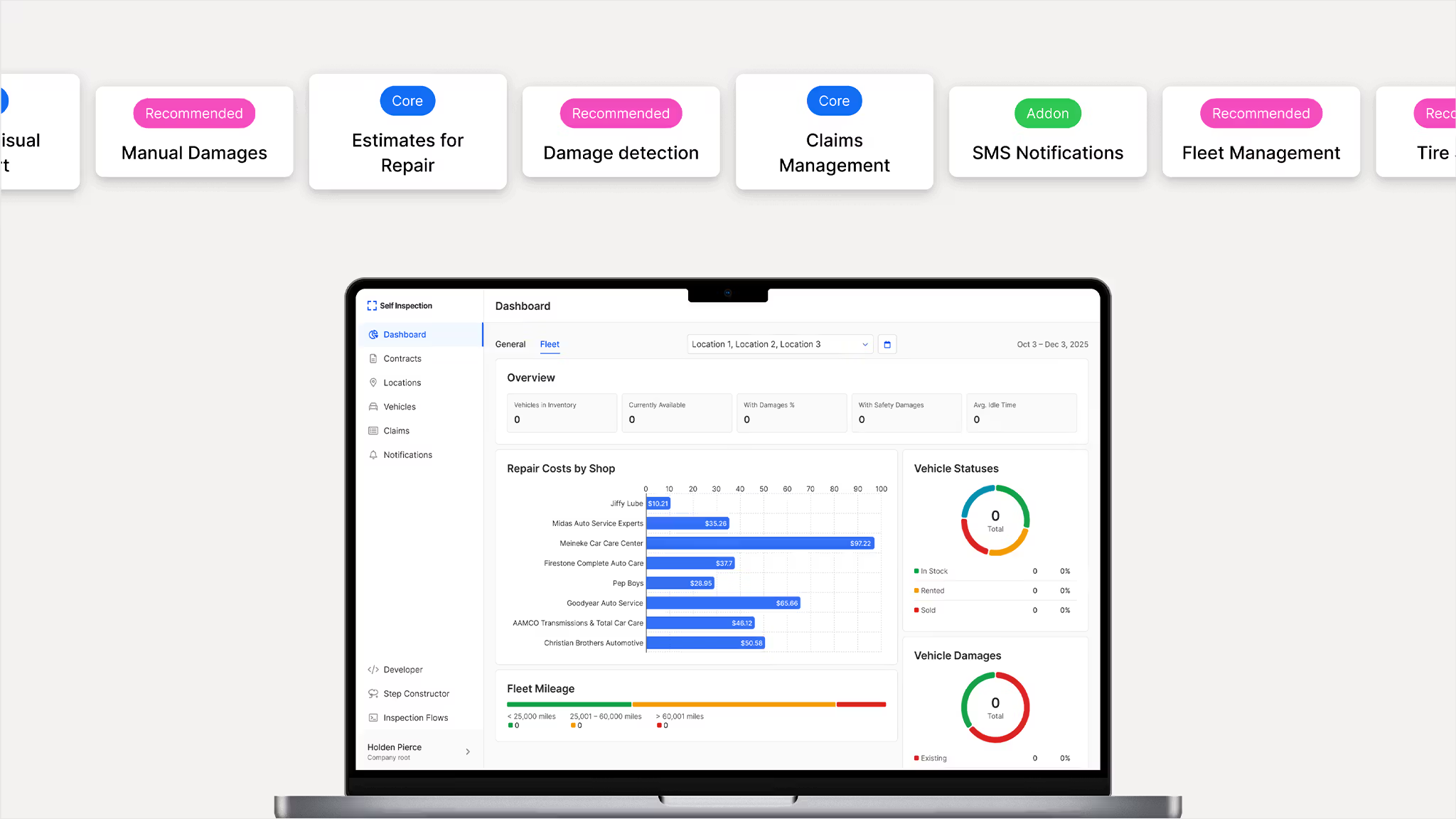
Using data and machine learning: The foundation of automation intelligence
Every damaged vehicle tells a story:
- A minor scratch reveals different impact angles.
- Paint chips expose underlying metal conditions.
- Dent patterns indicate collision forces.
Human inspectors might catch obvious damages, but they miss the subtle narratives embedded in automotive damage patterns.
Machine learning systems read these stories differently.
The training data revolution: How 10+ million scanned vehicles transform the game
Self Inspection's proprietary AI models are trained on large datasets of damaged vehicles to quickly detect and assess damage severity.
This specialized automotive focus creates a fundamental advantage over generic computer vision systems attempting to adapt general object recognition for vehicle assessment.
Consider the complexity involved:
- Damage Type Specialization: Algorithms learn to distinguish between stress fractures and manufacturing defects.
- Environmental Context: Systems recognize how lighting conditions affect damage visibility and adjust analysis accordingly.
- Vehicle-Specific Knowledge: AI models understand how damage manifests differently across vehicle makes, models, and materials.
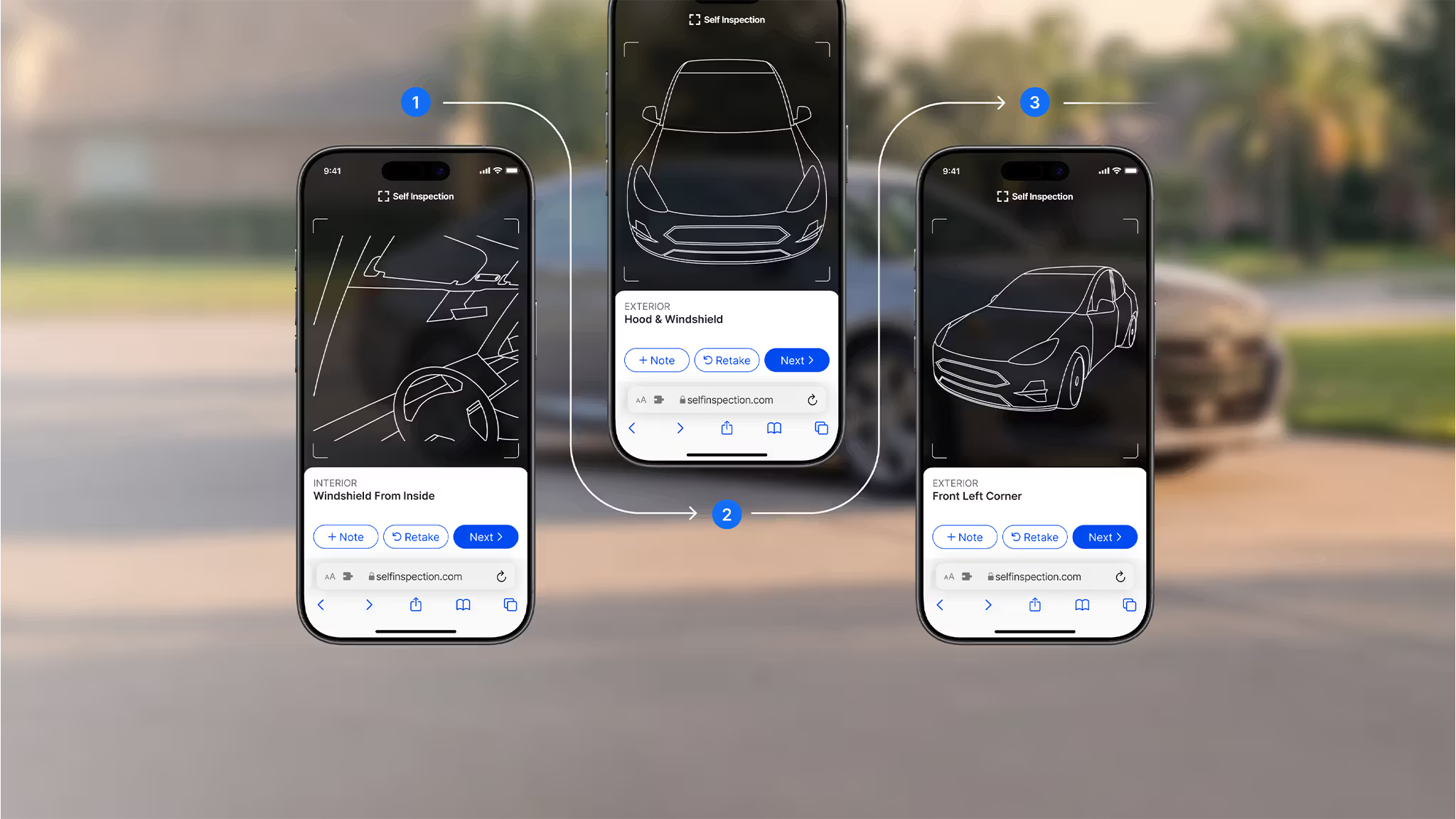
Expert verification integration: The human-AI partnership model
Why does full automation require human expertise during the transition period? Because of the fundamental differences between theoretical automation and practical business implementation.
At Self-Inspection, All AI-generated results are then reviewed by trained experts to ensure over 85% accuracy. This hybrid approach addresses critical business requirements that pure automation cannot satisfy:
- Quality Assurance: Expert validation ensures results meet business standards and regulatory requirements before operational decisions.
- Edge Case Management: Human professionals handle unusual scenarios that require contextual judgment beyond algorithmic capabilities.
- Continuous Improvement: Expert feedback creates learning loops that enhance AI performance through real-world validation.
The expert verification model represents a strategic transition rather than a permanent requirement. As AI systems demonstrate consistent performance across diverse scenarios, human oversight gradually shifts from active validation to exception handling and quality monitoring.
This means that instead of having to analyze each vehicle in person, automotive inspectors can process 3x+ more vehicles at scale.
2030 automation roadmap: Technological milestones and timeline
Smart technology adoption requires understanding exactly what capabilities emerge and when. Self Inspection is one of the leaders in the field because of our strategic planning that aligns with emerging industry requirements.
Here’s what we have planned at Self Inspection for the next 5 years:
2025-2026: Enhanced AI with selective expert verification (current state)
Our current damage assessment technology already achieves over 80% accuracy through expert validation and 3D imaging. During the expansion of our technological stack, we expect to completely eliminate human intervention for routine assessments,while maintaining human oversight for complex scenarios and quality control:
- Target Achievement: 85% of inspections requiring minimal human oversight.
- Key Developments: Advanced edge case handling expands autonomous capabilities to unusual damage patterns and environmental conditions.
- Business Impact: Operational inspection costs decrease by 40-50% while maintaining quality standards that exceed manual inspection reliability.
2027-2028: Contextual automation with exception handling
This phase represents the automation inflection point where AI systems handle complex decision-making while routing edge cases to human experts:
- Target Achievement: 95% autonomous operation for standard automotive assessments.
- Key Developments: Bigger and more accurate data set, increased speed of AI damage recognition, predictive quality assessment anticipates potential issues before they affect vehicle performance or safety.
- Business Impact: Complete video inspection workflows that operate without human intervention, except for capturing the damages with a phone, regulatory compliance and to quality-check unusual circumstances.
2029-2030: Full automation with oversight capabilities
The final automation phase delivers complete autonomous operation while maintaining human oversight availability for regulatory requirements, quality assurance and reporting purposes:
- Target Achievement: Complete autonomous operation with human expertise available on-demand for quality assurance and legal compliance.
- Key Enablers: Regulatory framework evolution accommodates autonomous assessment standards across automotive applications.
- Business Impact: Inspection costs approach zero marginal cost while accuracy and consistency exceed any human-achievable standards.
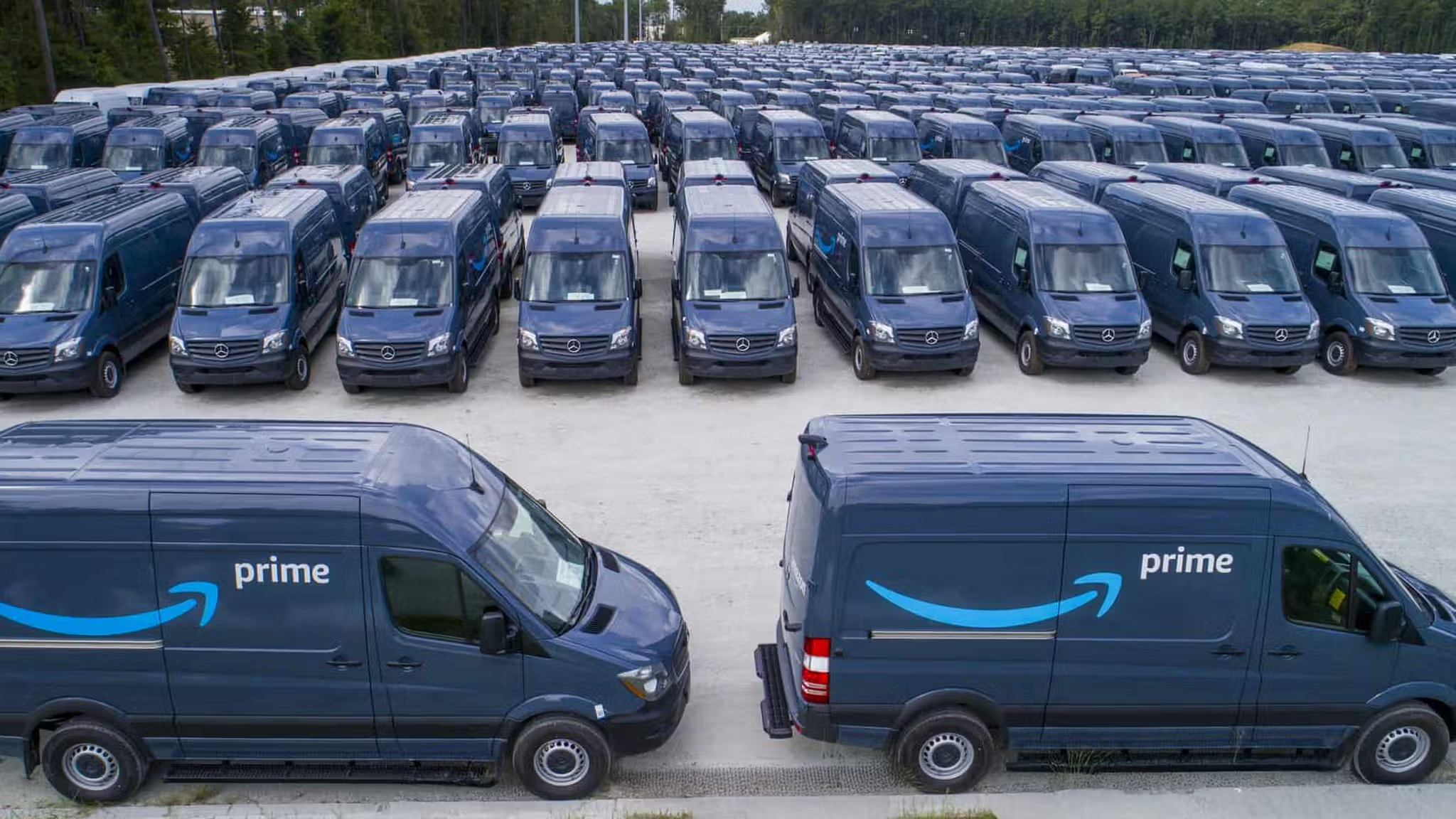
The future of inspections today: Amazon's van inspection case study
Amazon's partnership with one AI car inspection platform revealed both automation potential and infrastructure limitations that smart businesses must understand when evaluating technology approaches.
Amazon's fleet of over 100 thousand vehicles with systems deployed across hundreds of their warehouses has helped the technology giant automate damage assessment at an unprecedented scale.
Amazon’s approach demonstrated the automation benefits of AI vehicle assessments while highlighting significant accessibility challenges:
- Infrastructure Requirements: Amazon had to build a multi-million dollar infrastructure with specialized tunnels equipped with camera arrays and sensor networks that required significant capital investment and installation time.
- Installation Complexity: Each location needed months of planning, construction, and calibration before becoming operational.
- Scalability Constraints: Hardware-dependent systems like the one Amazon used created linear cost increases as fleet operations expand to new locations - while still demonstrating promising ROI.
This accessibility difference between Self Inspection solution and our competitors would determine which businesses could benefit most from autonomous vehicle inspections. While infrastructure-heavy investments into accurate AI damage recognition could work for them - they may not work for smaller players on the market. While Amazon's scale justifies massive infrastructure investment, most automotive operations require solutions that work within existing facilities.
Explore our comprehensive vehicle body inspection capabilities that set us apart and demonstrate automated vehicle inspection advantages - similar to the technology Amazon used.

Competitive landscape: Self Inspection's automation advantages
Two fundamental approaches define automated vehicle inspection technology: infrastructure-dependent systems requiring specialized hardware installations, and software-based solutions operating through mobile devices. This choice determines implementation speed, scalability, and long-term operational flexibility.
Self Inspection's smartphone-based approach
Modern smartphones provide sufficient computational power and image quality for professional-grade vehicle assessment when paired with sophisticated AI processing:
- Deployment Speed: New locations become operational immediately without equipment installation or facility modifications.
- Cost Structure: Software licensing eliminates capital equipment investment while providing unlimited processing capacity.
- Operational Flexibility: Staff members across multiple locations access identical capabilities without geographic or equipment constraints.
Specialized hardware limitations:
Infrastructure-dependent competitors face systematic disadvantages that compound across business operations:
- Installation Timeline: Specialized equipment requires months of planning, installation, and calibration before becoming operational.
- Capital Investment: Hardware systems demand significant upfront investment that increases proportionally with location expansion.
- Maintenance Requirements: Physical equipment needs ongoing maintenance, calibration, and eventual replacement that software solutions avoid entirely.
These fundamental differences determine which businesses can successfully implement automation technology within realistic timeframes and budgets.
Discover advanced AI-powered vehicle inspections that deliver professional results through accessible smartphone technology.

Industry validation and client success
Real-world deployment across diverse automotive sectors validates automated inspection technology more effectively than laboratory testing or pilot programs. Self Inspection's technology is currently being used by rental car giant Avis, CarGurus' wholesale platform CarOffer and investor Westlake Financial, demonstrating proven results across multiple automotive applications.
Proven Results Across Multiple Automotive Sectors:
- Rental Operations: Avis leverages automated inspections to streamline fleet management and reduce dispute-related operational costs.
- Wholesale Marketplaces: CarOffer integrates inspection technology to provide accurate vehicle valuations that accelerate transaction cycles.
These implementations prove automated vehicle inspection technology delivers measurable business value across diverse operational requirements and regulatory environments.

Preparing for the automated future: Implementation strategy
What infrastructure changes are required to implement automated vehicle inspections? The answer reveals one of Self Inspection’s greatest advantages: minimal preparation requirements and hardware costs that enable rapid adoption across existing operations.
Technology Requirements Compared to Hardware-Dependent Solutions:
- Mobile Device Standards: Standard smartphones provide sufficient processing power and image quality for professional inspection results.
- Internet Connectivity: Basic broadband connections support cloud-based processing without specialized network requirements.
- Integration Capabilities: Existing automotive software systems connect through standard APIs without custom development or system replacement.
Staff Training and Role Evolution Strategies - successful automation implementation requires understanding how technology enhances rather than replaces human capabilities:
- Skill Development: Staff members learn to leverage AI insights while applying professional judgment to complex scenarios.
- Role Enhancement: Inspectors transition from routine documentation to quality oversight and exception handling responsibilities.
- Career Advancement: Technology proficiency creates advancement opportunities as automation capabilities expand across operations.
Change Management for Automation Transition - smart implementation strategies address organizational concerns while demonstrating immediate value:
- Phased Deployment: Gradual rollout allows staff adaptation while proving technology benefits through measurable results.
- Performance Metrics: Clear measurement standards demonstrate efficiency improvements and quality enhancements.
- Feedback Integration: Staff input guides technology refinement while building ownership and acceptance.

Conclusion: The inevitable automated future
The transformation toward automated vehicle inspections represents more than technological advancement - it's an operational evolution that determines competitive positioning in tomorrow's automotive landscape. Organizations that embrace accessible automation solutions gain sustainable advantages through improved efficiency, enhanced accuracy, and unlimited scalability.
Self Inspection's Unique Advantages in the Automation Race:
- Accessibility: Smartphone-based technology eliminates infrastructure barriers that prevent widespread adoption.
- Reliability: Expert verification ensures business-grade accuracy that exceeds pure automation or manual alternatives.
- Scalability & Low Harware Requirements: Software-based solutions grow with business requirements without proportional cost increases. Additionally, our autonomous vehicle inspections enable you to produce vehicle reports at scale across multiple locations.
The choice isn't whether automation will transform vehicle inspections - it's whether your organization will lead or follow this inevitable transition.
Ready to explore automation opportunities for your operation? Schedule an automation roadmap consultation to discuss implementation strategies tailored to your specific requirements.
Frequently asked questions about automated vehicle inspections
Here are some of the questions our customers asked us when implementing automated vehicle inspections in their operations:
How does Self Inspection differ from other automated vehicle inspection providers?
Most automated vehicle inspection providers require expensive infrastructure investments that create barriers to adoption. Consider Amazon's partnership with other damage inspection solutions - while impressive in scale with over 100 thousand vehicles across hundreds of warehouses, it demanded specialized tunnel installations, sensor arrays, and lengthy setup.
Self Inspection takes a fundamentally different approach:
- Smartphone Accessibility: Standard mobile devices provide professional-grade inspection capabilities without specialized equipment requirements.
- Immediate Deployment: New locations become operational within days rather than months required for hardware installation.
- Expert Verification: All AI-generated results are then reviewed by trained experts to ensure over 90% accuracy, combining automation efficiency with human expertise.
- Software Scalability: Cloud-based processing handles volume increases without proportional infrastructure investment.
This accessibility difference determines which businesses can actually benefit from automation technology versus those limited by capital requirements and installation complexity.
What is SAHI technology and how does it accelerate automation?
SAHI technology identifies microscopic paint damage, subtle dent patterns, and edge damage that escape traditional inspection methods entirely. This breakthrough enables automated systems to exceed human inspection capabilities while maintaining commercial viability.
Core SAHI Principles:
- Dynamic Image Processing: Creates overlapping analysis slices that capture damage at multiple scales and orientations.
- Multi-Resolution Analysis: Examines identical areas at different magnification levels, ensuring comprehensive detection.
- Real-Time Optimization: Maintains commercial processing speeds without sacrificing detection accuracy.
What are the current limitations of AI in vehicle inspections?
Honest assessment reveals that AI technology, while advanced, still faces specific challenges that require ongoing development:
- Novel Damage Patterns: AI struggles with damage types not well-represented in training datasets.
- Extreme Environmental Conditions: Performance can degrade in unusual lighting or weather scenarios.
- Complex Vehicle Modifications: Custom features or aftermarket modifications sometimes confuse standard recognition algorithms.
- Regulatory Framework: Legal and liability requirements for fully autonomous assessments remain under development.
Self Inspection addresses these limitations through expert verification systems that provide human oversight while AI capabilities continue advancing. This hybrid approach ensures reliable results today while building toward full automation by 2030.
What is the automated inspection process using Self Inspection's platform?
The automated inspection process transforms complex vehicle assessment into straightforward workflows:
- Vehicle Identification: Smartphone scanning captures VIN and pulls relevant vehicle specifications.
- Guided Documentation: AI-directed photo and video capture ensures comprehensive coverage without technical expertise.
- Automated Analysis: SAHI technology processes imagery to identify damage at multiple scales and orientations.
- Expert Verification: Automotive professionals review AI findings to ensure accuracy and reliability.
- Instant Reporting: Complete condition reports generated immediately with photographic evidence and repair cost estimates.
This process reduces inspection time from 45 minutes to 15 minutes while achieving accuracy levels that exceed manual alternatives. The system works through standard smartphones, eliminating specialized equipment requirements that limit competitor adoption.
What is the difference between manual inspection and automated inspection?
Manual and automated inspection methods represent fundamentally different approaches to vehicle assessment:
Manual Inspection Characteristics:
- Time Investment: 1 hour+ per vehicle for thorough documentation.
- Human Variables: Results vary based on inspector experience, fatigue, and environmental conditions.
- Subjective Assessment: Damage severity ratings depend on individual judgment and interpretation.
- Documentation Challenges: Paper-based or basic digital reports lack standardization and consistency.
Automated Inspection Advantages:
- Speed Efficiency: Complete assessments in 15 minutes through AI-guided workflows.
- Consistent Standards: Identical evaluation criteria applied across all vehicles and conditions.
- Objective Analysis: Standardized damage classification eliminates subjective interpretation variations.
- Digital Documentation: Instant report generation with photographic evidence and cost correlations.
The transition from manual to automated inspections represents more than efficiency improvement - it creates standardization, scalability, and reliability that manual processes simply cannot match. This transformation explains why the $30 billion vehicle inspection market increasingly adopts automation technology for competitive advantage.

Ready to get started?
Streamline lease returns, reduce disputes and accelerate remarketing readiness - all from one simple platform.