AI-Powered vehicle inspections for auctions: Reducing costs, time & disputes

Auction houses across North America face mounting operational pressures that directly impact their profitability and competitive positioning: rising labor costs, increasing vehicle volumes, and growing customer expectations for transparent condition reporting create perfect storm conditions that challenge traditional inspection methodologies.
Traditional auction car inspections dependent on manual assessment now represent operational bottlenecks that limit growth potential and increase per-vehicle processing costs.
On the contrary, AI-powered auction car inspection systems transform these challenges into competitive advantage by automating time-intensive assessment processes while delivering consistent documentation standards that reduce post-sale disputes and enhance customer satisfaction across all auction formats.

Key statistics: Market-driven auction car inspection transformation
Traditional approaches create operational constraints that limit throughput capacity while increasing per-vehicle assessment costs that erode profit margins.
Forward-thinking auction houses implement AI inspection technology to address operational challenges while positioning themselves for sustained growth in increasingly competitive markets. AI models can resolve each claim within 5 minutes, compared to traditional methods taking days, demonstrating the transformative potential of automated assessment systems.
Critical performance indicators driving the auction vehicle inspection market forward:
- The global online car auctions market was valued at $5.2 billion in 2023 and is projected to reach $12.7 billion by 2032, growing at a CAGR of 10.6%.
- NAAA member auctions reported nearly 7.3 million vehicles sold through auction in 2023, representing 11% growth over 2022.
- AI inspections can cut the time it takes to process a vehicle from 45 minutes to less than 5 minutes.
The Auction Industry's Operational Challenges
Auction house operations face fundamental scalability challenges that traditional manual inspection processes cannot address effectively. Companies implementing AI report up to 30% cost savings on inspection operations with significant reductions in processing times, highlighting the operational transformation potential available through technology adoption.
There are four main operational constraints connected to manual condition report processing plaguing the auction industry:
- Labor Dependencies: Manual inspections require experienced technicians whose availability limits processing capacity.
- Time Bottlenecks: Detailed vehicle assessments consume 45-90 minutes per vehicle, restricting daily throughput volumes.
- Quality Variations: Individual inspector expertise and environmental conditions create inconsistent assessment standards.
- Documentation Burden: Manual condition reporting requires additional administrative time that delays auction listing processes.
Traditional approaches fail to deliver these capabilities at scale, creating operational bottlenecks that limit business growth.
When it comes to ROI on every auction sale, manual report processing also creates additional operational costs:
- Direct Labor Costs: Skilled inspection personnel command premium wages while focusing on routine assessment activities.
- Overhead Expenses: Physical inspection facilities require substantial space and equipment investments.
- Processing Delays: Extended assessment times increase vehicle storage costs and delay sale opportunities.
- Dispute Resolution: Inconsistent documentation creates post-sale disputes that consume administrative resources.
Last but not least, manual auction vehicle reports hinder the overall buyers’ experience Customer Impact Considerations:
- Buyer Confidence: Inconsistent condition reporting reduces bidder participation and limits sale prices.
- Seller Satisfaction: Extended processing times delay sale completion and reduce customer retention.
- Market Reputation: Quality variations damage auction house credibility and competitive positioning.
- Service Differentiation: Manual processes prevent auction houses from offering premium services that command higher fees.
Self Inspection's AI reduces fleet inspection costs, demonstrating measurable operational improvements available through strategic technology implementation. Progressive auction houses recognize these efficiency gains as essential for maintaining competitive positioning in rapidly evolving markets.
The evolution of auction car inspections
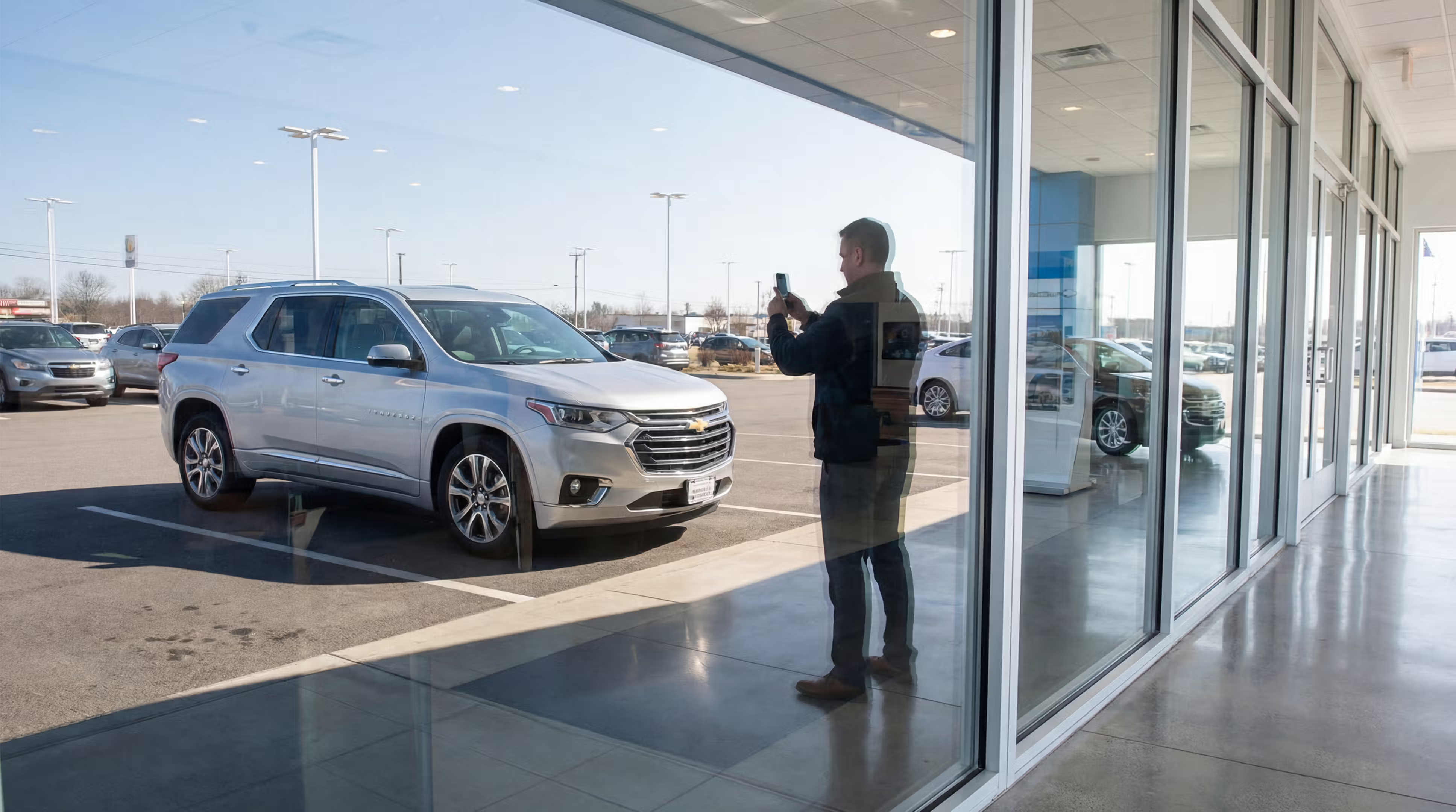
Car auction inspection service methodologies are evolving from basic visual assessments ( pictures of cars taken from different angles) to comprehensive condition evaluation systems that capture not only exterior damages, but also interior checks and mechanical inspections.
Historical approaches prioritized speed over consistency, creating quality variations that modern auction environments cannot accommodate.
Traditional inspection protocols developed during periods when auction volumes remained manageable through manual processes and customer expectations focused primarily on basic condition disclosure. Contemporary markets demand standardized assessment criteria that support informed bidding decisions while protecting auction house liability.
Historical Inspection Limitations:
- Subjective Assessment: Individual inspector experience determined evaluation quality and consistency.
- Limited Documentation: Basic condition notes provided insufficient detail for informed purchasing decisions.
- Environmental Dependencies: Lighting and weather conditions affected assessment accuracy and reliability.
- Scalability Constraints: Manual processes could not accommodate volume growth without proportional staff increases.
The imperative change: Manual vs. AI-powered auction vehicle inspections
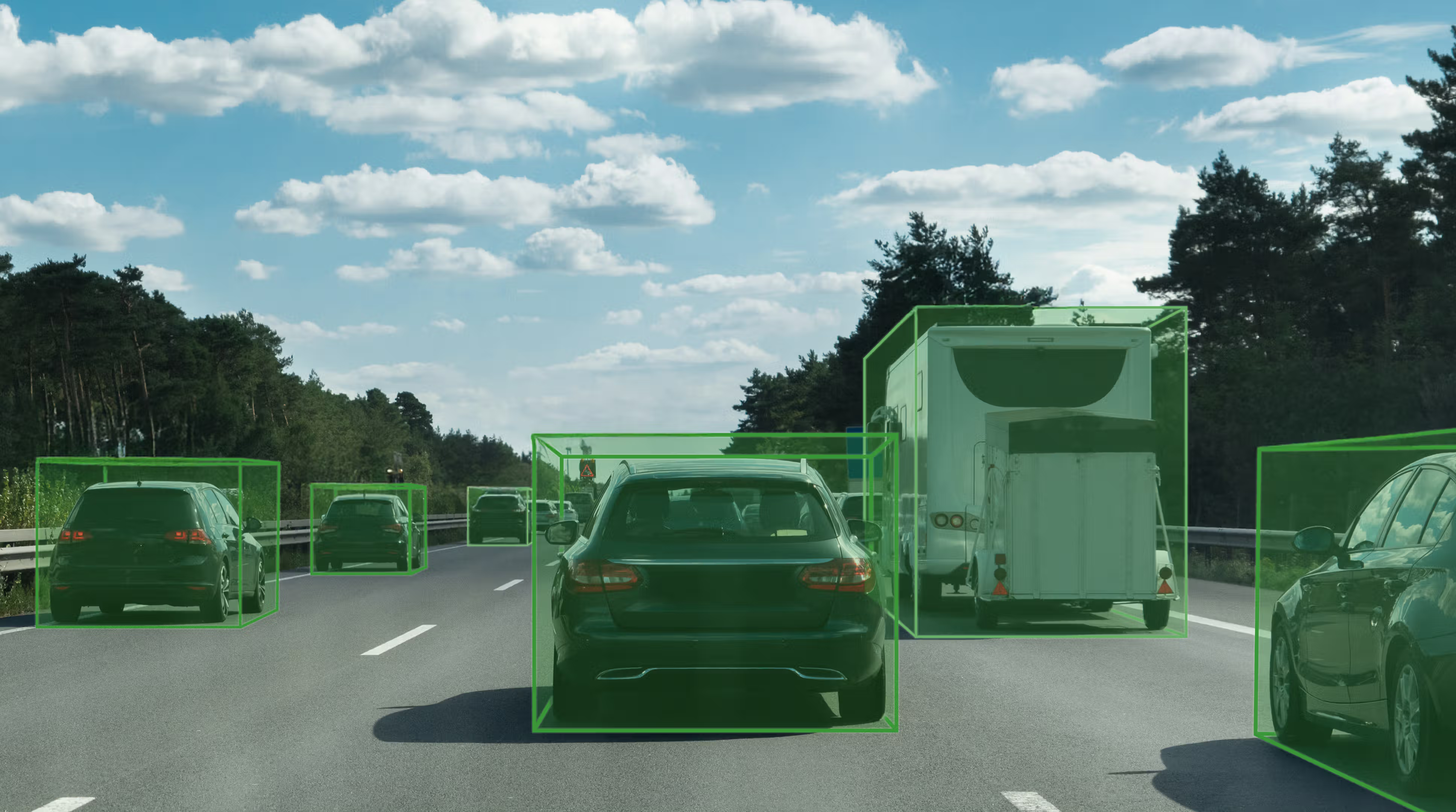
Auction vehicle inspection processes utilizing human assessors face consistency challenges that AI technology eliminates through standardized evaluation criteria. Manual inspection approaches depend heavily on individual technician expertise and environmental conditions that create inherent variability in assessment outcomes. On the other hand, AI Vehicle inspections rely on a standardized set of criteria trained on millions of vehicle images and ready reports.
Manual Inspection Characteristics:
- Time Requirements: Comprehensive assessments require 45-90 minutes per vehicle depending on complexity and thoroughness.
- Skill Dependencies: Assessment quality varies significantly based on inspector experience and training levels.
- Subjectivity Issues: Damage severity interpretation differs between individuals examining identical conditions.
- Environmental Sensitivity: Weather, lighting, and facility conditions influence assessment accuracy and completeness.
AI-Powered Assessment Advantages:
- Processing Speed: AI inspections can cut the time it takes to process a vehicle from 45 minutes to less than 5 minutes, while maintaining comprehensive evaluation standards.
- Consistency Standards: Identical evaluation criteria applied regardless of environmental conditions or personnel availability.
- Scalability Potential: Technology capacity increases without proportional staffing requirements or facility expansion.
- Documentation Quality: Standardized reports include photographic evidence and detailed condition classifications.
Automated damage recognition technology demonstrates how advanced algorithms identify damage types and severity levels that manual inspection might overlook or misclassify. Computer vision systems analyze vehicle imagery at pixel level, detecting subtle variations in surface conditions that indicate developing issues.
Comparative Performance Metrics:
Why Auction Car Inspections Matter for Buyers and Sellers?
Comprehensive vehicle condition assessment serves critical functions that extend beyond basic damage identification to encompass risk management, value protection, and transaction facilitation for all auction participants.
Accurate condition documentation enables informed bidding decisions while protecting auction houses from post-sale disputes.
Seller Value Enhancement:
- Market Positioning: Professional condition documentation demonstrates vehicle quality and justifies pricing expectations.
- Transparency Benefits: Comprehensive reporting builds buyer confidence that supports competitive bidding environments.
- Liability Protection: Standardized documentation protects sellers from claims regarding undisclosed conditions.
- Processing Efficiency: Automated assessment systems reduce time-to-market and minimize carrying costs.
By the same token, introducing more user-friendly and consistent vehicle condition reports, improves buyer experience as well:
- Informed Decision-Making: Detailed condition reports enable accurate value assessment and bidding strategy development.
- Risk Mitigation: Comprehensive damage documentation reveals potential repair requirements and associated costs.
- Dispute Prevention: Standardized condition classification reduces disagreements about vehicle status and sale terms.
- Investment Protection: Accurate assessments prevent overpaying for vehicles requiring extensive undisclosed repairs.
Auction car inspection services provide the foundation for transparent transactions that benefit all participants while supporting auction house operational efficiency. Professional condition assessment creates trust relationships that encourage repeat participation and referral business.

How AI technology transforms auction vehicle assessments
Modern auction environments demand assessment capabilities that process vehicle data faster than human capacity while delivering documentation standards that support confident bidding decisions.
AI vehicle inspection platforms operate across three core technological pillars:
- Computer Vision Processing: Pixel-level vehicle imagery analysis identifying damage types invisible to manual inspection.
- Machine Learning Enhancement: Continuous algorithm improvement through exposure to diverse vehicle conditions and repair validation.
- Data Analytics Integration: Real-time market pricing and historical trend analysis supporting accurate valuation decisions.
Core AI features: Computer vision, machine learning, and data analytics
Computer vision technology analyzes vehicle imagery at microscopic levels, detecting surface variations that indicate damage development patterns. Automated car damage detection systems process multiple photographic angles simultaneously, creating comprehensive condition profiles that exceed human visual assessment capabilities.
Advanced Detection Capabilities:
- Multi-Surface Analysis: Complete vehicle examination identifying damage across paint, glass, plastic, and metal surfaces.
- Microscopic Precision: Detection of hairline scratches, paint inconsistencies, and surface irregularities measuring under 0.5mm.
- Pattern Recognition: Identification of damage combinations indicating collision history or structural compromise.
- Anomaly Detection: Recognition of unusual wear patterns suggesting mechanical issues or previous undisclosed repairs.
Machine learning algorithms continuously refine assessment accuracy through validation against actual repair outcomes and expert inspector feedback. Systems learn from millions of inspection scenarios, improving damage classification and cost estimation precision over time.
Real-Time, standardized reports and their impact
Instant report generation eliminates processing delays that traditionally extended auction listing timelines from days to hours. Self Inspection's AI reduces fleet inspection costs by up to 70%, with unmatched accuracy, demonstrating measurable improvements through standardized assessment protocols that ensure consistent quality across all vehicle evaluations.
Immediate Operational Benefits:
- Instant Decision-Making: Complete condition analysis available within 3-5 minutes of assessment completion.
- Resource Reallocation: Staff focus shifts from routine assessment to customer service and sales activities.
- Listing Acceleration: Faster vehicle processing enables same-day auction listing and scheduling.
- Quality Consistency: Identical documentation standards regardless of assessment volume or location.
Professional condition reports include comprehensive photographic documentation, standardized damage classifications, and precise repair cost estimates integrated with current market pricing data. This standardization creates buyer confidence while protecting auction houses from post-sale disputes through transparent condition disclosure.
Reducing operational costs with AI-driven inspections
Labor cost optimization represents the most immediate financial impact for auction houses implementing AI inspection technology:
- Direct Labor Savings: Reduced dependency on skilled inspection personnel for routine assessment activities.
- Processing Efficiency: Higher vehicle throughput without proportional resource increases.
- Error Elimination: Consistent assessment standards preventing costly mistakes and rework requirements.
- Facility Optimization: Improved space utilization through faster vehicle processing and reduced storage needs.
Labor savings and inspection time efficiency
Traditional inspection processes require experienced technicians earning $25-75 per hour for assessments limiting daily capacity to 8-12 vehicles per inspector. AI body inspection solutions eliminate these labor constraints while improving assessment quality through standardized evaluation criteria.
Efficiency Transformation Illustrated:
Scaling auction operations through automated inspection solutions
Auction house scalability requires operational solutions that handle increasing vehicle volumes while maintaining consistent quality standards and customer satisfaction. NAAA member auctions reported nearly 7.3 million vehicles sold through auction in 2023, representing 11% growth over 2022, highlighting industry growth demanding scalable operational capabilities.
Automated inspection systems provide scalability through:
- Unlimited Processing Capacity: AI systems handle any vehicle volume without performance degradation.
- Geographic Consistency: Standardized operations across multiple locations and markets.
- Peak Period Management: Automated handling of volume fluctuations without temporary staffing.
- Quality Maintenance: Consistent standards regardless of operational scale or distribution.
Streamlining high-volume processing for auction houses
High-volume operations require processing capabilities exceeding manual capacity while maintaining regulatory compliance and customer satisfaction standards. Our Platform overview demonstrates integrated AI systems supporting enterprise-scale operations through standardized workflows and automated documentation generation.
Volume Processing Capabilities:
- Simultaneous Processing: Multiple vehicle assessments conducted concurrently without quality compromise or resource conflicts.
- Batch Efficiency: Large consignment handling with consistent turnaround times and documentation quality.
- Operational Scaling: Automatic capacity adjustment during high-volume periods without disruption or quality reduction.
- Multi-Location Support: Consistent processing standards across regional markets and auction facilities.
Traditional manual bottlenecks during peak periods force auction houses to compromise assessment thoroughness or extend processing timelines, impacting customer satisfaction and operational efficiency. AI automation eliminates these constraints through unlimited processing capacity maintaining consistent quality standards.
This means that AI-driven auction car inspections build competitive market positioning:
- Processing Speed: Faster vehicle evaluation enables quicker listing and auction scheduling compared to manual competitors.
- Service Quality: Consistent professional documentation attracts sellers seeking reliable auction services.
- Cost Competitiveness: Operational efficiency enables competitive fee structures while maintaining healthy profit margins.
- Market Leadership: Technology adoption positions auction houses as industry innovators attracting premium vehicle consignments.
What's included in a typical AI-powered auction vehicle checklist?
AI-powered systems analyze every accessible vehicle component through standardized assessment frameworks that ensure consistent evaluation regardless of vehicle type, age, or complexity.
Professional auction inspections address three critical assessment areas: exterior condition analysis, interior component evaluation, and structural integrity assessment:
- Exterior Surface Analysis: Paint condition, body panel alignment, damage detection across all visible surfaces.
- Interior Component Evaluation: Upholstery condition, electronic systems functionality, wear pattern assessment.
- Structural Integrity Review: Frame condition, suspension components, undercarriage inspection for structural soundness.
- Mechanical Systems Check: Engine performance indicators (codes), transmission condition, brake system evaluation.
Detecting vehicle warning signs: Common red flags AI can spot
AI detection algorithms identify damage patterns and condition indicators that predict potential mechanical failures or indicate previous undisclosed incidents. These systems recognize subtle visual cues that manual inspectors might overlook, providing comprehensive risk assessment that protects buyer investments.
Critical Warning Sign Categories:
- Collision Indicators: Paint overspray patterns, panel gap inconsistencies, frame alignment deviations indicating previous accident damage.
- Flood Damage Signs: Water line evidence, electrical corrosion patterns, interior moisture damage indicators.
- Mechanical Wear Patterns: Unusual tire wear indicating alignment issues, engine component deterioration signs, transmission performance indicators.
- Previous Repair Evidence: Paint color variations, replacement part identification, bodywork quality assessment.
Advanced pattern recognition capabilities enable identification of damage combinations that indicate specific incident types or mechanical issues requiring immediate attention. These insights support accurate vehicle valuation while preventing post-purchase surprises that damage buyer relationships.
Apart from that, AI mixed with mechanical inspections can uncover a set of hidden issues naked eye can’t spot:
- Structural Compromise: Stress crack identification, weld failure detection, load-bearing component assessment.
- Electrical Problems: Wiring damage indicators, connection corrosion detection, system functionality verification.
- Engine Condition: Performance degradation signs, maintenance neglect indicators, component failure predictions.
- Transmission Issues: Fluid condition assessment, shifting mechanism evaluation, wear pattern identification.
Professional inspection protocols document all identified conditions with photographic evidence and severity classifications that support transparent communication between auction houses and bidders. Mixed with mechanical OBD 2 inspections, this comprehensive documentation reduces disputes while building market confidence in auction quality standards.

Who performs AI inspections and can buyers still hire independent evaluators?
Auction house inspection workflows accommodate multiple assessment providers while maintaining standardized documentation and communication protocols.
Primary Inspection Provider Categories:
- Auction House Systems: AI-powered platforms providing standardized condition reports for all auction inventory.
- Independent Inspectors: Certified professionals offering specialized assessment services for buyer-requested evaluations.
- Third-Party Services: Commercial inspection companies providing neutral assessments for dispute resolution and verification purposes.
- Manufacturer Networks: OEM-certified inspection services for specialty vehicles requiring specific expertise and equipment.
Buyer Access Rights:
- Pre-Auction Inspection: Designated time periods enabling independent inspector access to auction inventory.
- Remote Assessment: Digital inspection reports and documentation sharing between independent services and auction platforms.
- Verification Services: Third-party validation of AI-generated condition reports through comparative analysis.
- Specialized Evaluation: Access to experts for unique vehicles requiring specific knowledge or equipment.
Independent inspection services increasingly utilize mechanical inspection technology to complement visual assessments with comprehensive diagnostic analysis. This integration ensures buyers receive complete vehicle condition information supporting confident purchasing decisions.
Post-sale inspection coverage and limitations
Post-sale inspection protocols define dispute resolution frameworks and condition guarantee parameters that protect both buyers and auction houses from assessment disagreements. AI documentation systems provide foundation evidence for post-sale evaluations while establishing clear limitation boundaries.
Post-Sale Protection Framework:
- Condition Guarantees: Specific damage types and severity levels covered under auction house condition assurance programs.
- Documentation Standards: AI-generated reports serve as baseline evidence for post-sale dispute resolution processes.
- Timeline Limitations: Defined periods for post-sale inspection requests and dispute filing requirements.
- Resolution Procedures: Standardized processes for addressing condition discrepancies and assessment disagreements.
AI Documentation Advantages:
- Baseline Evidence: Comprehensive photographic records supporting all condition claims and assessments.
- Timestamp Verification: Digital documentation with verifiable creation dates preventing post-sale tampering or disputes.
- Objective Standards: Consistent evaluation criteria eliminating subjective interpretation in dispute resolution processes.
- Expert Validation: AI assessments reviewed by certified professionals ensuring accuracy and reliability for legal purposes.
Post-sale inspection limitations typically exclude normal wear items, maintenance requirements, and subjective quality assessments while covering significant structural, mechanical, or undisclosed damage issues. Clear documentation of these parameters reduces disputes while setting appropriate buyer expectations.
Implementation strategy for auction houses
Strategic AI implementation requires comprehensive planning that addresses technology integration, staff training, and operational workflow modifications while ensuring consistent service quality and customer satisfaction. Companies implementing AI report up to 30% cost savings on inspection operations with significant reductions in processing times, demonstrating measurable benefits available through systematic deployment approaches.
Implementation Planning Framework:
- Technology Assessment: Current system evaluation, integration requirements, and infrastructure capability analysis.
- Staff Preparation: Training programs, workflow modifications, and change management strategies for successful adoption.
- Operational Integration: Gradual deployment phases minimizing disruption while maximizing technology benefits.
- Performance Monitoring: Continuous measurement and optimization ensuring implementation objectives achieve expected outcomes.
Strategic Implementation Phases:
- Phase 1: Pilot program deployment with limited vehicle categories and controlled assessment parameters.
- Phase 2: Expanded implementation across additional vehicle types and operational areas with performance validation.
- Phase 3: Full deployment with advanced features, integration optimization, and comprehensive staff training.
- Phase 4: Continuous improvement through performance monitoring, feature enhancement, and competitive advantage development.
Most auction houses we worked with achieved full deployment of Self Inspection systems within two months.
Assessment phase: Evaluating your shop's AI readiness
Technology readiness assessment determines implementation requirements while identifying potential obstacles that could complicate AI adoption or reduce expected benefits. Successful auction houses conduct comprehensive evaluations covering infrastructure, staff capabilities, and operational workflows before committing to specific technology platforms.
Infrastructure Evaluation Components:
- Technology Compatibility: Existing auction management systems assessed for integration capabilities with AI inspection platforms.
- Network Capacity: Internet connectivity and bandwidth evaluated to support cloud-based processing and real-time data transmission.
- Hardware Requirements: Current mobile devices assessed for AI software compatibility or upgrade requirements identified for optimal performance.
- Security Protocols: Existing data protection measures reviewed to ensure compliance with AI platform requirements and customer information protection.
Deployment strategy and staff training programs
Successful AI implementation requires systematic deployment strategies that minimize operational disruption while maximizing technology adoption rates and staff confidence. Contact implementation specialists to get customized implementation guidance that addresses specific auction house requirements and operational constraints.
Training Program Components:
- Technology Orientation: Comprehensive introduction to AI inspection capabilities, user interfaces, and operational workflows.
- Practical Application: Hands-on training with actual auction inventory enabling staff confidence development through real-world experience.
- Quality Assurance: Assessment validation techniques ensuring staff can effectively review and confirm AI-generated condition reports.
- Customer Communication: Training on presenting AI inspection results to buyers, addressing questions, and maintaining professional service standards.
Implementation Timeline Considerations:
- Week 1-2: Infrastructure setup, system integration, and initial staff orientation with basic functionality training.
- Week 3-4: Pilot program launch with limited vehicle categories and supervised AI inspection implementation.
- Week 5-8: Expanded deployment across additional inventory with performance monitoring and optimization adjustments.
- Week 9-12: Full operational deployment with advanced features, comprehensive staff certification, and continuous improvement processes.
Conclusion: Auctions using AI technology for vehicle inspections build a competitive advantage
The auction industry continues evolving toward technology-enhanced operations that meet growing demands for transparency, efficiency, and professional service quality. Auction houses implementing AI inspection systems position themselves as industry leaders while building sustainable advantages that support long-term business growth and market success.
AI-powered vehicle inspections represent a fundamental transformation in auction house operations, delivering measurable improvements in efficiency, accuracy, and customer satisfaction while creating sustainable competitive advantages. The evidence demonstrates clear benefits across all operational areas, from cost reduction and processing speed to dispute prevention and customer trust building.

Ready to get started?
Streamline lease returns, reduce disputes and accelerate remarketing readiness - all from one simple platform.