AI Tire Inspections: Enhancing Safety & Reducing Operational Costs
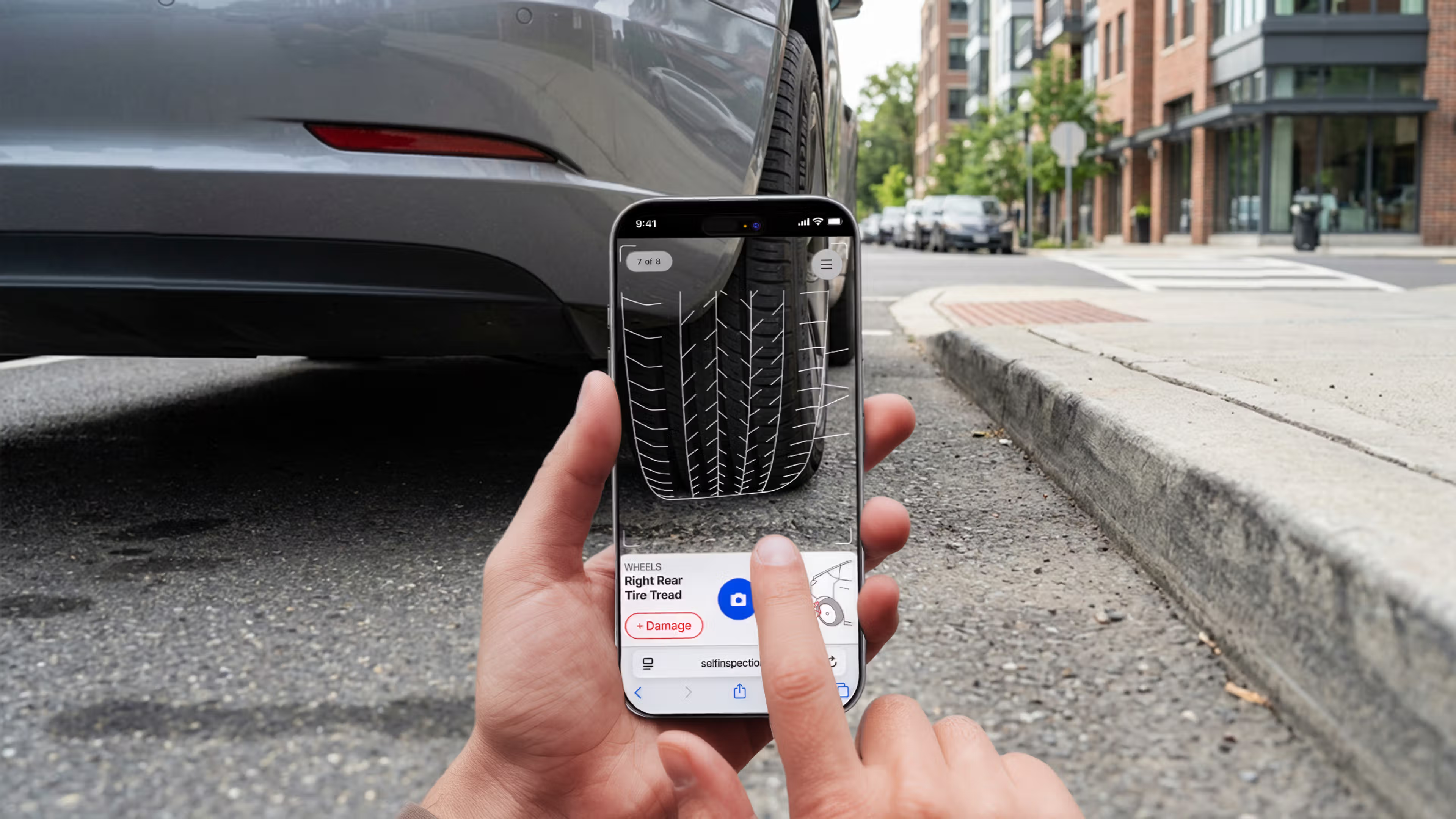
Fleet operations in commercial transportation sectors face mounting pressure to balance regulatory safety compliance with operational cost control. Traditional tire maintenance approaches operate on calendar-based schedules that ignore real-world usage variations, environmental stresses, and load factors that accelerate tire degradation patterns.
Tire inspection AI technology transforms this operational challenge through smartphone-based analysis that identifies developing issues before they compromise safety or create unexpected maintenance costs. Advanced computer vision algorithms enable proactive condition monitoring, preventing incidents while optimizing maintenance expenditures across diverse fleet operations.

Market-Driven Technology Transformation
Commercial fleet managers confront an operational reality where tire-related failures create both safety hazards and significant cost burdens. Current industry data reveals that traditional inspection protocols continue missing critical indicators of tire degradation, resulting in unexpected failures that disrupt operations and compromise safety compliance.
Critical Performance Indicators:
- Camera-based tire inspection systems dominate with 45.3% market share due to contactless accuracy and integration capabilities.
- 100% of dealerships implementing AI report increased revenue, with 81% anticipating increased AI budgets in 2025.
Technology Adoption Drivers:
Deep learning approaches achieve accuracy higher than 94% in real-world tire defect detection applications, establishing new benchmarks for fleet safety monitoring that exceed traditional manual inspection capabilities.
- Regulatory Compliance: Stricter safety requirements demand systematic condition monitoring.
- Cost Optimization: Unplanned tire replacements and emergency repairs strain operational budgets.
- Safety Performance: Manual inspections miss subtle indicators that predict failures.
- Operational Efficiency: Smartphone-based assessment eliminates specialized equipment requirements.
Operational Imperative for Advanced Tire Monitoring
Traditional maintenance approaches treat tire inspection as routine compliance activity rather than critical safety monitoring, ignoring fundamental realities of tire performance under varying operational conditions:
Current Tire Repair Industry Challenges
Global tire inspection system market reaches USD 238.6 Million in 2025, expanding to USD 336.6 Million by 2035 with 3.5% CAGR. Despite that most automotive professionals use outdated practices that bring more problems than solutions:
- Reactive Maintenance Protocols: Issues identified only after safety thresholds are compromised.
- Inconsistent Assessment Standards: Manual inspections vary significantly between personnel and environmental conditions.
- Limited Predictive Capabilities: Visual inspections miss early indicators of alignment issues and structural degradation.
- Operational Disruption: Unexpected tire failures create emergency repairs and route delays.
Tire Inspection AI Implementation Benefits:
Modern tire inspection AI solutions address these operational gaps through consistent digital analysis that provides standardized assessment criteria across all vehicles and locations. Automated tire inspection systems bring a plethora of benefits to your automotive business:
- Predictive Maintenance: Early detection prevents emergency repairs and operational disruptions.
- Cost Predictability: Systematic monitoring enables planned tire replacement schedulin.
- Safety Compliance: Documented condition tracking supports regulatory requirements
- Operational Efficiency: Smartphone-based assessment integrates seamlessly with existing workflows
AI-powered tire inspection systems achieve 99.5% accuracy in detecting surface defects including cracks, bulges, foreign particles, and dimensional inconsistencies, providing fleet managers with reliable data for maintenance decision-making.
The Evolution of Tire Inspections in Fleet Management
Commercial fleet operations historically relied on time-based maintenance schedules that treated tire inspection as periodic compliance requirements rather than continuous safety monitoring. This approach ignored fundamental factors including vehicle usage patterns, load distributions, route conditions, and environmental stresses that influence tire performance and degradation rates.
Modern fleet operations realized that the right approach to do business lies in preventive inspection methodologies rather than reactive approach. With modern AI tools, you can account for vehicle usage, load variations, route conditions, and environmental factors that influence tire performance.
Traditional Methods vs. AI-Powered Approaches to Tire Inspection
Manual tire inspections depend on visual assessment techniques that vary significantly based on inspector experience, environmental lighting, and operational time constraints. A technician examining tires during optimal daylight conditions sees different condition details than one conducting inspections under artificial lighting or during adverse weather conditions.
That brings in a bunch of Manual Inspection Limitations:
- Subjective Assessment Criteria: Results depend on individual inspector experience and interpretation standards.
- Environmental Variable Impact: Lighting conditions affect damage visibility and assessment accuracy.
- Time Pressure Constraints: Rushed inspections miss subtle indicators of developing problems.
- Documentation Inconsistency: Paper-based or basic digital records lack standardization.
AI-powered tire assessments eliminate these variables through consistent digital analysis that applies uniform evaluation criteria regardless of environmental conditions or inspection personnel.
Key Difference: Unlike routine visual inspections, computer vision algorithms detect wear patterns, sidewall damage, and structural irregularities that indicate developing safety issues invisible to the naked eye.

Role of Smartphone-Based Assessments in Tire Inspections
Smartphone technology democratizes professional-grade tire analysis by eliminating specialized equipment requirements that traditionally limited comprehensive condition monitoring to dedicated service facilities.
Fleet personnel can now conduct detailed tire assessments using devices they already carry, removing technological and economic barriers to systematic condition tracking.
Smartphone-Based Assessment Capabilities:
Mobile-based tire inspection system technology provides instant condition assessment without disrupting operational schedules or requiring specialized training:
- Guided Video Worfklows: Modern AI solutions guide you through the process of documenting all the damages to ensure best results.
- Professional-Grade Analysis: Standard smartphone cameras provide sufficient resolution for detailed condition assessment.
- Operational Integration: Mobile assessments integrate seamlessly into existing route checks and maintenance protocols.
Real-Time Processing: Instant generated reports provide immediate condition feedback without processing delays. - Scalable Implementation: Technology scales across any fleet size without proportional equipment investment.
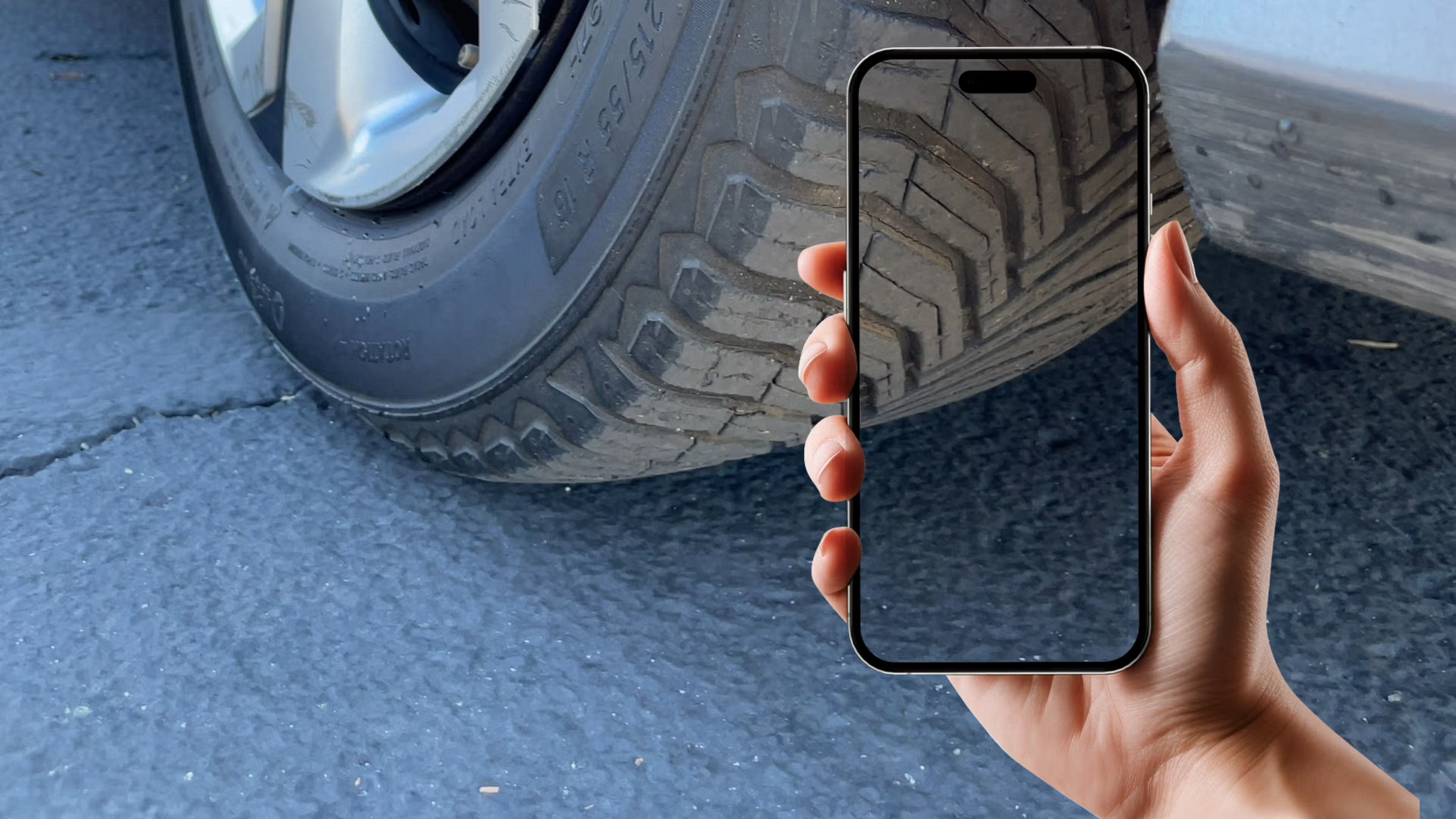
Drivers and maintenance personnel capture tire imagery during routine vehicle checks, with AI analysis delivering immediate feedback on condition status and maintenance recommendations.
AI-based approach solves the problem with implementation efficiency:
- Training Requirements: Intuitive smartphone interfaces require minimal technical instruction.
- Documentation Automation: Digital records integrate automatically with fleet management systems.
- Cost Effectiveness: Software-based solutions eliminate hardware procurement and maintenance expenses.
- Workflow Compatibility: Mobile assessments integrate into existing operational procedures without disruption.
For instance, Anyline leverages data from over 3 million tire inspections monthly across 230+ tire brands globally, demonstrating the scale and reliability of smartphone-based inspection technology. If your business concerns rental fleet inspections - you showcase accessible technology transforms high-volume fleet monitoring, providing consistent condition assessment.
How Tire Inspection AI Enables Preventive Maintenance Excellence
Modern tire inspection AI systems transform maintenance from reactive problem-solving to proactive condition management through continuous digital monitoring. Instead of manual inspection, advanced pattern recognition algorithms analyze tire imagery to identify maintenance indicators long before they become visible to human inspectors.
Predictive Maintenance Capabilities:
Fleet operations implementing predictive maintenance report significant improvements in operational efficiency and cost predictability. Maintenance schedules align with actual tire condition rather than arbitrary time intervals, reducing both premature replacements and unexpected failures that disrupt operational schedules:
- Wear Pattern Analysis: Early detection of alignment issues, pressure inconsistencies, and load distribution problems.
- Degradation Trending: Historical condition tracking that predicts replacement timing within specific mileage ranges.
- Maintenance Optimization: Integration with fleet scheduling systems to coordinate tire service with other maintenance activities.
- Cost Planning: Accurate replacement forecasting enables budget planning and bulk purchasing strategies.
Real-Time Detection of Tire Defects and Irregularities
Tire inspection AI systems process smartphone imagery through machine learning algorithms trained on millions of vehicles to identify specific defect categories that indicate immediate safety concerns or developing maintenance needs. This real-time analysis provides instant feedback on tire condition status, enabling immediate operational decisions when safety thresholds are approached.
Here are just a few use-cases:
- Sidewall Damage: Cuts, punctures, bulges, and weathering that compromise structural integrity.
- Tread Irregularities: Uneven wear patterns indicating alignment, suspension, or pressure issues.
- Foreign Object Penetration: Nails, screws, and debris embedded in tire surfaces.
- Dimensional Changes: Bulging, cracking, or deformation that suggests internal damage.
Tire Maintenance and Accident Prevention Strategies
Fleet safety protocols require systematic approach that goes beyond basic condition monitoring to encompass comprehensive accident prevention strategies. Automated tire inspection technology enable this by letting fleet managers to develop maintenance protocols specifically designed to prevent tire-related incidents before they occur:
- Predictive Replacement Scheduling: Maintenance timing based on actual degradation patterns rather than mileage estimates.
- Load Management Optimization: Tire condition analysis guides load distribution decisions to prevent overloading damage.
- Route Safety Planning: Condition data influences route selection based on tire capability and road conditions.
Advanced fleet safety programs utilize tire inspection AI to establish preventive maintenance cultures that prioritize safety over reactive repair approaches. And manual tire inspection processors get left behind.
Compliance and Documentation Benefits:
Fleet operators who implement comprehensive tire safety protocols report measurable improvements in safety performance metrics and insurance premium reductions:
- Regulatory Adherence: Digital maintenance records support Department of Transportation compliance requirements.
- Insurance Risk Mitigation: Systematic tire monitoring demonstrates due diligence for liability protection.
- Driver Safety Training: Condition data supports driver education programs on tire-related safety factors.
- Emergency Response Planning: Tire condition histories inform roadside assistance and emergency repair protocols.
These maintenance strategies transform tire management from cost centers into safety investments that protect fleet operations while demonstrating corporate responsibility and regulatory compliance commitment.

Cost Savings Through Automated Tire Inspection Technology
Fleet operations recognize tire management as a significant cost center that impacts both direct replacement expenses and indirect operational costs through vehicle downtime and emergency repairs.
Automated tire inspection technology transforms these cost structures by enabling data-driven maintenance decisions that optimize tire lifecycle management while reducing unplanned expenses.
Systematic condition monitoring through smartphone-based assessment eliminates specialized inspection personnel requirements while providing more accurate condition data than traditional visual inspections. With AI, automotive professionals gain precise insight into tire degradation patterns that enable optimized replacement timing, preventing both premature replacements and emergency failures that disrupt operations.
And the financial impact is obvious:
- Direct Cost Reduction: Optimized replacement timing prevents premature tire disposal and emergency procurement premiums.
- Labor Efficiency: Smartphone-based assessment reduces inspection time and eliminates specialized technician requirements.
- Operational Continuity: Predictive maintenance prevents unscheduled downtime and route disruptions.
- Insurance Benefits: Systematic safety monitoring may qualify for reduced insurance premiums and liability exposure.
Advanced analytics identify cost-saving opportunities through tire rotation optimization, pressure management protocols, and load distribution adjustments that extend tire lifecycle while maintaining safety standards across diverse operational environments.
Extending Tire Lifespan and Lowering Replacement Costs
Tire replacement represents one of the largest recurring expenses in fleet operations, making lifecycle optimization a critical factor in operational profitability. AI-powered condition monitoring provides precise data on tire wear patterns that guide maintenance decisions to maximize tread life across all wheel positions.
To put it simply, tire inspection AI eliminates surprise failures by identifying developing issues during routine smartphone-based assessments, enabling maintenance scheduling during planned service intervals:
- Maintenance Windows: Planned tire service occurs during scheduled downtime rather than emergency interruptions.
- Resource Allocation: Maintenance teams focus on productive service activities rather than reactive emergency repairs.
- Driver Productivity: Reduced roadside breakdowns maximize driver utilization and route completion rates.
- Customer Service: Reliable tire condition prevents delivery delays that impact customer relationships.
AI Tire Lifecycle Extension Methodologies:
Precise wear analysis guides alignment corrections and pressure adjustments that prevent premature replacement while identifying tires requiring immediate attention before safety thresholds are compromised. Data-driven purchasing decisions optimize tire selection for specific application requirements based on actual performance data:
- Rotation Optimization: AI analysis identifies optimal tire rotation timing based on actual wear patterns rather than mileage estimates.
- Pressure Management: Systematic monitoring detects gradual pressure loss that accelerates tread wear and reduces fuel efficiency.
- Alignment Correction: Early detection of uneven wear patterns guides suspension and alignment maintenance to prevent premature replacement.
- Load Distribution: Tire condition analysis informs load management decisions that prevent overloading damage.
Bundled together, all these actions biring significant cost Management Benefits:
- Replacement Timing: Accurate condition assessment prevents premature replacement while avoiding safety compromise.
- Procurement Planning: Predictive analytics enable bulk purchasing strategies and vendor negotiations based on accurate replacement forecasting.
- Warranty Protection: Systematic documentation supports warranty claims for defective tires or premature failures.
- Performance Tracking: Historical data identifies tire brands and models that provide optimal value for specific operational requirements.

Future-Proofing Fleet Safety Through Advanced Tire Monitoring
Fleet managers implementing advanced tire inspection technology report sustained improvements in safety performance metrics while reducing long-term operational costs through proactive maintenance strategies Our AI vehicle inspection platform demonstrates how comprehensive monitoring transforms fleet safety management from reactive problem-solving to proactive risk prevention.
Fleet Managers' AI Tire Inspection Questions & Answers
Fleet operations managers consistently ask specific questions about implementing AI tire inspection technology in their operations. These answers address the most common concerns based on real-world deployment experiences and technical specifications.
How accurate are AI-powered tire inspections compared to manual checks?
Tire inspection AI systems achieve accuracy rates exceeding 94% in real-world applications, significantly outperforming manual visual inspections that typically vary 15-25% between different inspectors examining identical tire conditions. Digital analysis eliminates human subjectivity while identifying subtle wear patterns and damage indicators invisible to routine visual assessment.
What equipment is required to implement smartphone-based tire assessments?
Modern smartphone devices with 8MP+ cameras provide sufficient resolution and processing power for professional-grade tire analysis, eliminating the need for specialized equipment or infrastructure investment. Tire inspection system technology operates through standard mobile applications that guide users through optimal image capture techniques.
The only requirements include: smartphone compatibility with standard mobile apps, basic internet connectivity for cloud-based processing, and integration capability through API connectivity with existing fleet management systems.
Can AI tire inspection systems integrate with fleet management software?
Yes, automated tire inspection platforms offer comprehensive API connectivity that seamlessly integrates with existing fleet management systems, maintenance scheduling software, and inventory management platforms. Digital condition data feeds directly into established operational workflows without requiring system replacements.
How quickly can fleets expect to see cost savings from AI inspections?
Cost savings typically appear within three months through reduced emergency repairs, optimized maintenance timing, and extended tire lifecycle management, with full ROI realized within 6-12 months of implementation across fleet operations.
Immediate benefits include emergency repair reduction and improved maintenance scheduling efficiency. Short-term savings develop through optimized tire replacement timing and reduced roadside assistance costs. Long-term ROI emerges from extended tire lifecycles and comprehensive maintenance cost optimization that reduces operational expenses.
Can you fail an inspection because of tires?
Yes, tire condition failures represent one of the most common vehicle inspection failures due to insufficient tread depth, visible damage, or safety-related wear patterns that AI systems detect consistently and accurately. Regulatory requirements mandate specific tire condition standards affecting inspection pass rates.

Ready to get started?
Streamline lease returns, reduce disputes and accelerate remarketing readiness - all from one simple platform.