Superior vehicle damage detection: how advanced AI annotation creates unmatched accuracy

AI vehicle annotation has emerged as the transformative force behind next-generation vehicle inspection systems. While automotive AI captures headlines for its speed and accuracy improvements, the invisible foundation determining success or failure lies in annotation quality—the meticulous process of labeling millions of vehicle damage images that train these AI systems.
This comprehensive analysis reveals why AI annotation quality separates industry leaders from competitors, and how Self Inspection's methodology creates sustainable competitive advantages for automotive professionals.

The critical role of data annotation in AI-powered vehicle damage detection
The relationship between AI annotation quality and model performance in automotive AI applications extends far beyond simple accuracy metrics. Research demonstrates that annotation quality improvements of 5% yield 15-20% model performance gains, making annotation methodology one of the primary determinant of vehicle body inspection systems.
How data annotation fuels modern AI systems with automotive-specific data requirements
The annotation process determines model bias and fairness across different vehicle categories. Poor AI annotation practices embed systematic errors causing AI systems to misclassify certain vehicle types or damage patterns. Self Inspection's methodology specifically addresses these challenges through diverse data collection and expert validation ensuring equitable performance.
Case study analysis: Self Inspection's 10 million image dataset impact
Self Inspection's annotation investment becomes evident when compared to industry standards. While competitors train on thousands of images, our proprietary dataset encompasses over 10 million expertly annotated vehicle images, each validated through multi-stage quality assurance involving certified automotive professionals.
Explore our comprehensive platform overview to understand our annotation-driven approach.
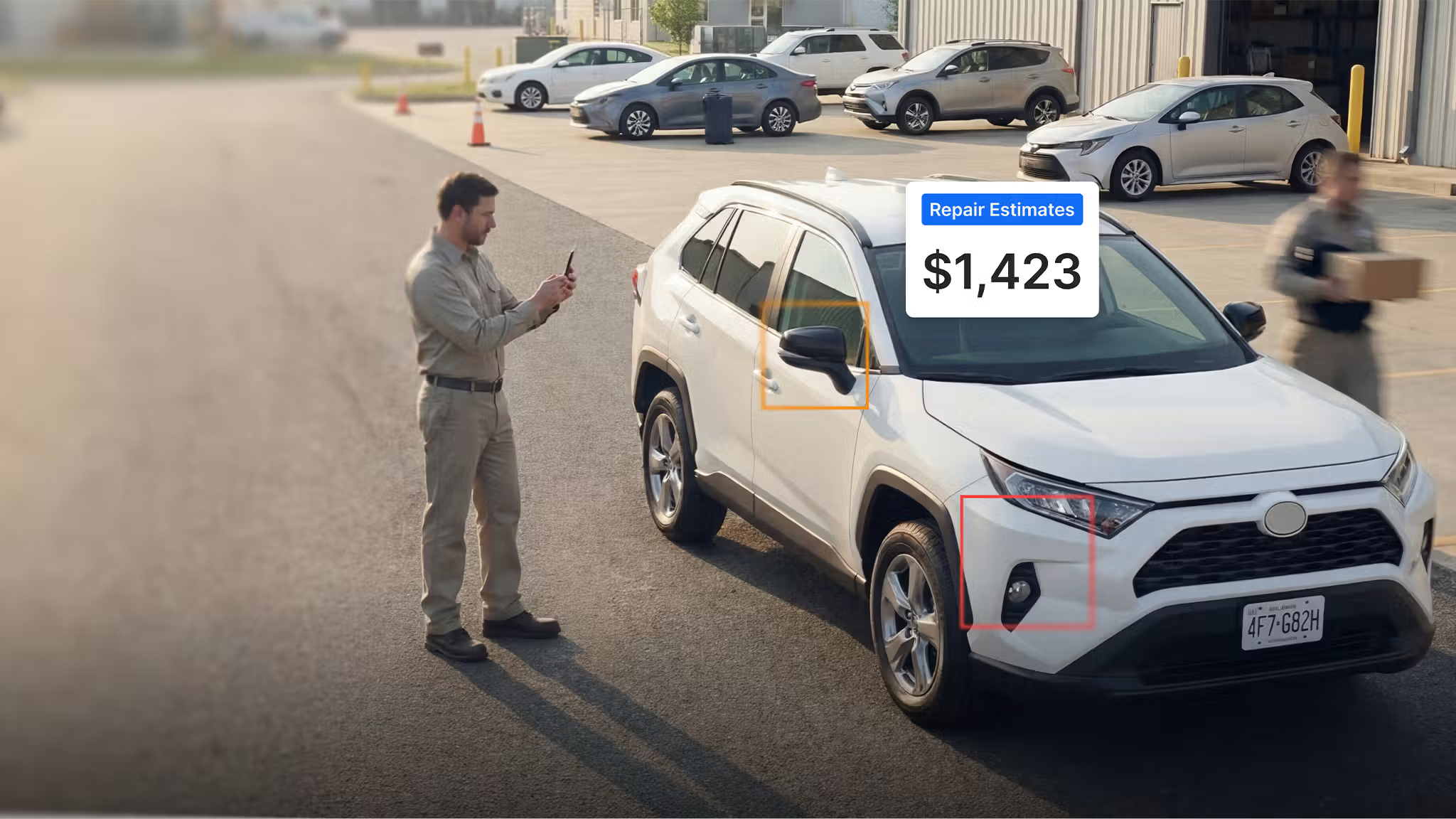
Understanding AI annotation: Core concepts and processes in automotive damage detection
Professional AI annotation for vehicle damage detection requires deep understanding of automotive construction, damage mechanics, and repair processes that enable AI systems making nuanced decisions comparable to experienced technicians.
Defining AI annotation within vehicle damage context: Beyond generic computer vision
AI annotation in automotive applications involves semantic labeling capturing damage presence, location specificity, severity gradation, and repair implications.
Unlike general computer vision tasks labeling objects as "car" or "tree," automotive AI data labeling requires precision classification of specific body panels, damage types, and severity levels directly influencing repair decisions.
Self Inspection's annotation taxonomy encompasses over 6,000 damage and vehicle part combinations, enabling automotive AI systems providing granular assessment matching professional inspector capabilities. This depth includes hierarchical damage classification supporting accurate repair cost estimation and insurance claim validation.
Expert Validation Process: Integration of Automotive Knowledge
The critical differentiator in Self Inspection's AI annotation approach involves direct integration of certified automotive expertise throughout labeling processes. Unlike generic annotation services relying on general-purpose labelers, our methodology incorporates automotive technicians understanding damage mechanics and industry standards.
This expert validation ensures AI data labeling accuracy that generic approaches cannot achieve. Automotive professionals recognize subtle damage indicators and assess repair implications influencing proper classification—creating training datasets reflecting real-world expertise rather than superficial pattern recognition.
The critical importance of superior annotation quality for AI accuracy and reliability
AI annotation precision creates cascading effects throughout automotive AI system performance, directly impacting business outcomes for professionals across the automotive ecosystem.
Impact of annotation precision on machine learning model reliability in automotive use cases
Annotation errors propagate through model training, creating systematic failures in damage detection and classification. Research confirms 15-20% performance impact per 5% annotation quality improvement, establishing AI annotation methodology as the primary success factor for automotive AI systems.
High-quality AI data labeling reduces false positive rates preventing unnecessary repair recommendations while minimizing false negatives missing critical damage. This accuracy improvement enhances customer satisfaction, reduces operational costs, and supports regulatory compliance across automotive applications.
Direct effects on false positive reduction and missed damage minimization
Industry standards demonstrate achievable performance levels: automated systems identify surface and structural damage with up to 90% accuracy using properly annotated datasets. Self Inspection exceeds these benchmarks through superior AI annotation methodology achieving near-complete detection accuracy.
Business impact extends beyond accuracy metrics to operational efficiency. Accurate damage assessment accelerates insurance claim processing, reduces disputes, and enables predictive maintenance scheduling optimizing fleet operations.

Unique challenges and complexities in automotive damage annotation
Automotive AI annotation presents unique challenges absent in general computer vision applications, requiring specialized methodologies for effective AI data labeling and model training.
#1: Visual complexity and variability of vehicle surfaces affecting annotation quality
Vehicle surfaces create AI annotation challenges through reflective properties, complex geometries, and varying textures requiring sophisticated labeling techniques maintaining consistency across lighting conditions and viewing angles. Curved panels, chrome trim, and multiple material interfaces demand specialized annotation approaches.
Paint finish variations significantly impact damage visibility for AI data labeling purposes. Metallic finishes reflect light differently than matte surfaces, while pearl coatings create optical effects complicating accurate damage assessment. Professional AI annotation addresses these challenges through specialized protocols accounting for material properties.
#2: Handling rare damage types, environmental variations, and edge cases
Self Inspection's automotive AI approach incorporates specialized techniques for uncommon damage patterns including hail damage, flood impact, and vandalism incidents requiring domain expertise for accurate classification and severity assessment.
Research supports strategic AI annotation prioritization: entropy querying reduces annotation costs while improving performance through strategic data selection. Self Inspection applies active learning principles ensuring comprehensive edge case coverage without excessive AI data labeling overhead.
#3: Active learning for edge case prioritization
AI annotation efficiency improves through intelligent sample selection focusing annotator effort on images providing maximum model improvement. Entropy-based selection identifies challenging examples requiring expert attention while reducing redundant labeling of similar scenarios.
#4: Environmental factor integration
Weather conditions, geographic variations, and seasonal effects influence damage appearance and AI annotation requirements. Our methodology accounts for these variables ensuring robust automotive AI performance across diverse operating conditions supporting global deployment scenarios.

Demonstrable business benefits of investment in high-quality annotation
Self Inspection's AI annotation features deliver quantifiable business improvements for automotive professionals across multiple use cases and operational scenarios.
Insurance claim accuracy improvements and faster processing times
Superior insurance vehicle damage detection reduces claim disputes through accurate damage assessment and consistent reporting standards. Insurance companies report significant processing acceleration and dispute reduction when implementing automotive AI systems trained on high-quality datasets.
Customer satisfaction also improves through transparent, accurate assessments supported by comprehensive damage documentation.
Operational efficiency gains for fleet managers and automotive finance stakeholders
Fleet management operators achieve measurable efficiency gains through accurate damage assessment enabling predictive maintenance scheduling and repair prioritization. Self Inspection clients report significant cost reduction in fleet inspection operations while improving asset utilization.
Accurate vehicle condition evaluation reduces lending risk while enabling competitive pricing for qualified borrowers. Our Vehicle Mechanical Inspection capabilities provide comprehensive coverage supporting finance decision-making.
Customer satisfaction and retention impact
AI annotation quality directly impacts customer experience through accurate, consistent service delivery. Professional-grade automotive AI systems reduce assessment variability while providing transparent documentation supporting customer confidence in evaluation processes. These operational advantages create sustainable competitive positioning in automotive service markets.
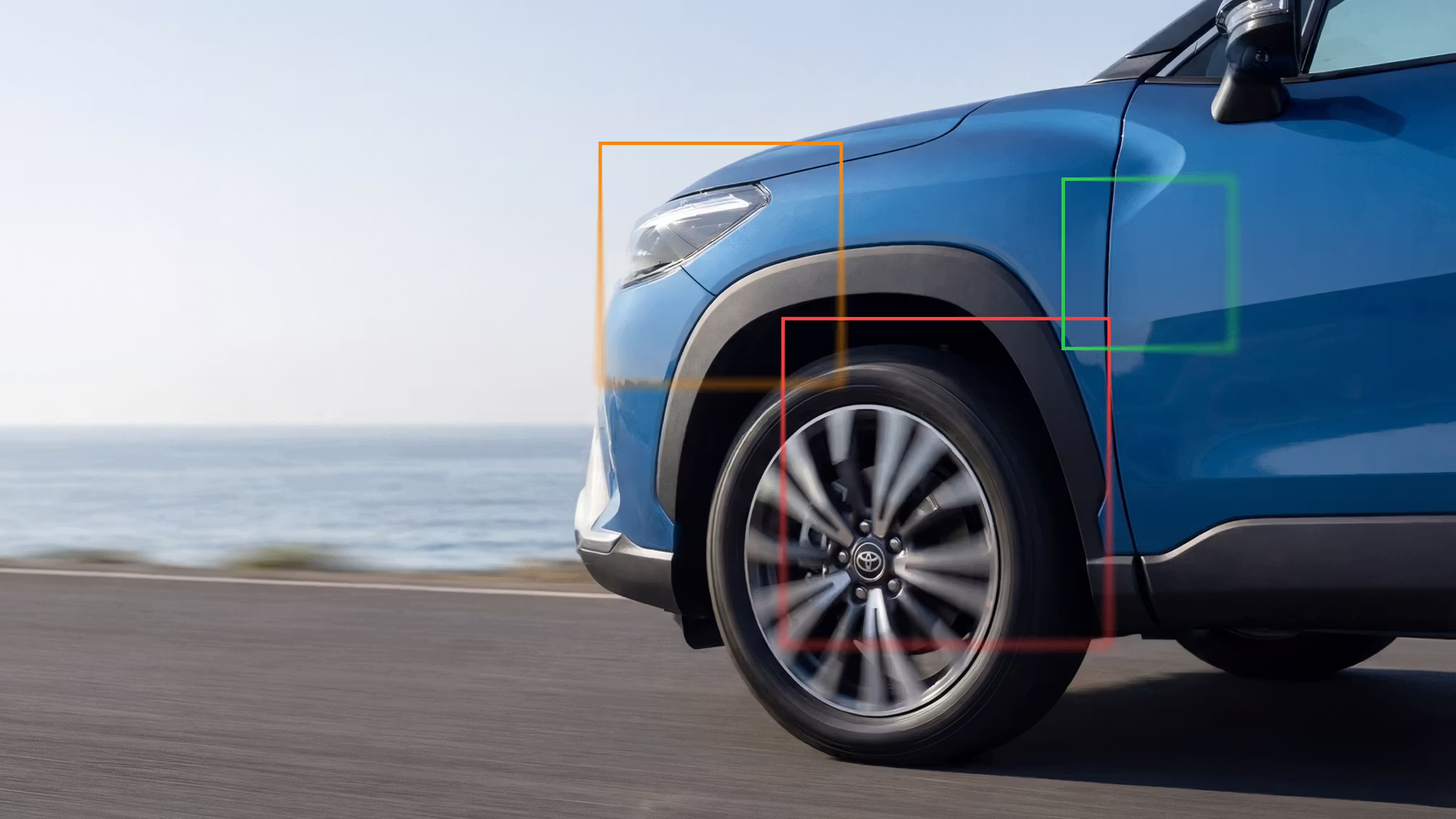
Conclusion: Why superior annotation is the cornerstone of state-of-the-art AI vehicle damage detection
Evidence overwhelmingly demonstrates AI annotation quality as the fundamental differentiator between automotive AI systems providing basic functionality versus transformative business value. Self Inspection's unprecedented investment in AI data labeling excellence creates sustainable competitive advantages for automotive professionals.
Self Inspection's proprietary AI annotation approach, incorporating 10+ million expertly validated images with comprehensive damage coverage, establishes new industry standards for accuracy and reliability. This foundation enables 99% detection accuracy and 65% operational cost reduction for automotive professionals.
As automotive AI adoption accelerates across finance, insurance, and fleet management sectors, AI annotation quality increasingly determines market success. Organizations partnering with Self Inspection access annotation-powered capabilities that competitors cannot replicate through software development or data acquisition alone.
Contact Self Inspection to explore how superior AI data labeling methodology can accelerate your automotive AI initiatives while reducing risks and improving business outcomes.

Ready to get started?
Streamline lease returns, reduce disputes and accelerate remarketing readiness - all from one simple platform.